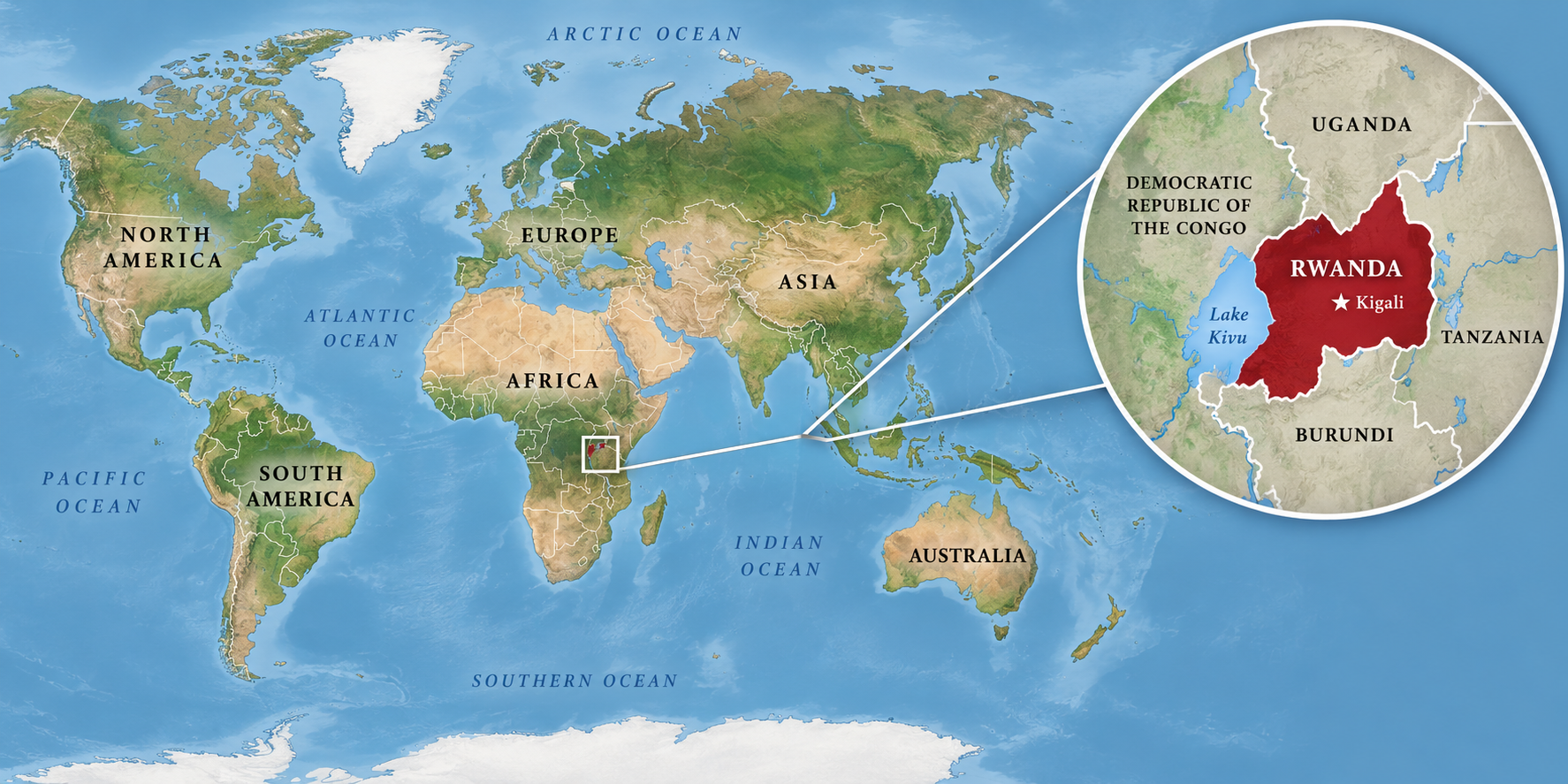
The first time I traveled to Rwanda, I did not know exactly what to expect. I flew into Kigali, where I was picked up, and from there we drove for several hours, up and over the mountains and into the eastern part of the country. Eventually, we arrived at a small village well outside the capital. There were few automobiles, the roads were dirt, and the homes were simple. I had come to teach a week-long course on the biblical prophets, and about fifty men and women had gathered for the training. Each day, we would spend several hours together studying Scripture.
The chapel where we met was simple—a plain, square building filled with benches. When I arrived, the students were already there with their Bibles. They were given notes for the course, and as I taught, they listened attentively, followed along in their Bibles, and took notes. They were excited to be there and eager to learn. At first, that was primarily what I noticed: a room filled with men and women who wanted to study the Bible. But as the week went on, I began to understand what it had taken for them simply to be sitting on those benches.
These students had not simply driven across town to attend a class. Some had traveled for hours. Some had walked for miles. Others had taken buses, sometimes combining public transportation with long stretches of walking. For some, getting to the training had taken much of a day. Because they lived so far away, they found places to stay in the village for the week. They had left their homes, their families, their work, and their normal responsibilities behind for the opportunity to receive theological training. The more I learned about what it had taken for them to get there, the more differently I began to view the group sitting in front of me.
One of the moments that stands out in my memory happened around lunchtime. We would break from our studies and gather together for a simple meal—large piles of rice and a basic meat dish. As I looked around at these men and women eating and talking together, I began to appreciate what their presence represented. Every person sitting there had made a decision that studying Scripture was worth the cost of getting there. They had given up time with their families, stepped away from their work, traveled significant distances, and found somewhere to sleep for the week simply so they could sit together in that chapel and learn.
Coming from a place where theological education is readily accessible, it is easy to take it for granted. We have Bible colleges, seminaries, books, conferences, online courses, podcasts, and countless other resources available to us. If we want to study theology, learn more about Scripture, or receive ministry training, we usually do not have to travel very far to find an opportunity. When theological education is always within reach, it can become easy to forget how valuable that access actually is. For many of the people sitting in that chapel in Rwanda, however, theological training was not readily available. Their willingness to sacrifice in order to receive it demonstrated just how much they valued the opportunity.
That week helped me understand something that has stayed with me ever since. There are pastors and church leaders around the world who deeply value theological education precisely because it is not readily available to them. The men and women sitting in that chapel certainly did not need to be convinced that training mattered. Their presence had already demonstrated that. The question for those of us who have access to theological education, resources, and trained teachers is what responsibility we have toward brothers and sisters who desire that same training but cannot easily obtain it.
That question has become an important part of how I think about theological education and the ministry of Tri-M Global. If faithful pastors and church leaders cannot easily leave their churches, families, work, and communities for extended periods in order to pursue theological education, we should not always expect them to come to where the training is located. Sometimes the training needs to go to them. Bringing biblical and theological education within the reach of ministry leaders allows them to receive serious training while remaining connected to the churches and communities in which they are already serving.
I traveled a long way to Rwanda to teach that week, crossing an ocean and then traveling for hours into the countryside. But when I think back on that first trip, the distance I traveled is not what stands out to me. What I remember most is how far they were willing to travel to learn.