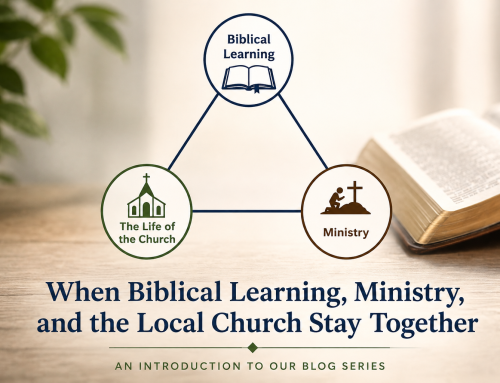
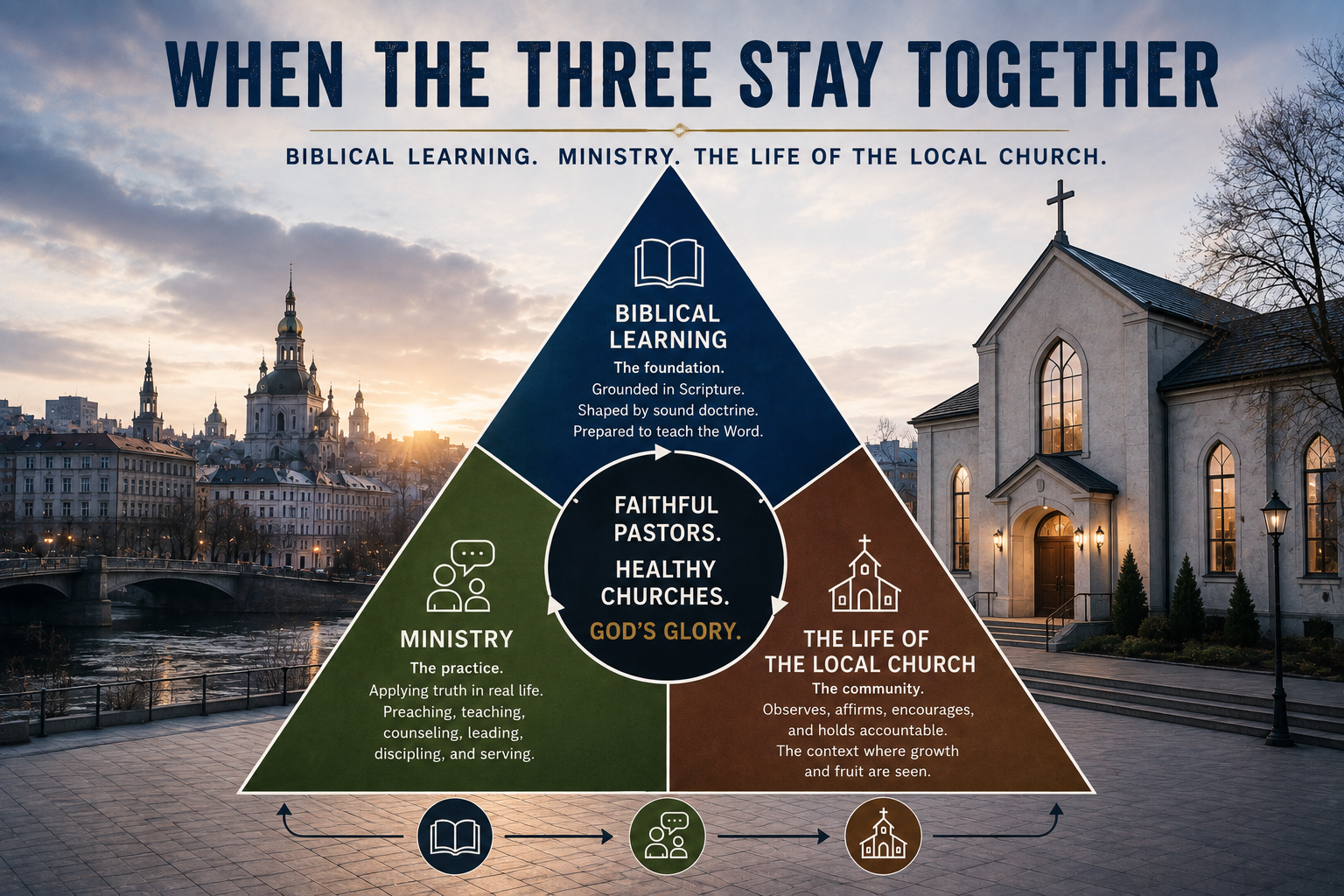
Over the past several posts, I have been making a case for a simple idea: theological education is strongest when biblical learning, ministry, and the life of the local church remain connected. We began with biblical learning because ministry must have a foundation. Pastors need to know Scripture, understand sound doctrine, and develop the ability to think biblically. We then considered ministry because biblical truth is not intended merely to be understood; it must be put into practice. Finally, we considered the life of the local church because pastors are not formed or called to serve in isolation. They minister among real people who hear their preaching, experience their leadership, observe their character, and participate in their growth. Each of those three elements matters, but the primary argument of this series has never been that we simply need more of each one. We do not solve the challenges of theological education merely by adding more Bible courses, more ministry assignments, or more church involvement. The greater issue is the relationship among them. The strength comes from integration. Biblical learning should continually shape ministry, ministry should provide opportunities to apply and deepen biblical learning, and the local church should be the community in which much of that learning and ministry is lived, observed, strengthened, and multiplied.
That integration is at the heart of what I have come to understand as Modular Theological Education. I did not arrive at this conviction primarily by developing an educational theory and then looking for places to implement it. It developed gradually through two decades of teaching pastors and ministry leaders in different parts of the world. I have taught in different cultures, worked with pastors at different educational levels, taught through translators, and watched students encounter both the opportunities and limitations of theological education. Through those experiences, I have repeatedly seen the value of allowing pastors to receive serious biblical instruction while remaining actively engaged in the ministries and churches where God has already placed them. The word modular can easily cause us to focus primarily on the schedule. A course is taught intensively over a shorter period; the teacher leaves, and another course is offered later. That structure certainly matters. It makes theological education accessible in settings where traditional residential education may be difficult or impossible, allows teachers to travel to students rather than requiring every student to relocate to a school, and can make training available to pastors who could never leave their congregations for several years. But a modular schedule by itself is not an educational philosophy. Compressing a semester-long course into an intensive format does not necessarily produce better pastoral formation. If all we have done is change the calendar, we have missed much of the opportunity the modular approach provides.
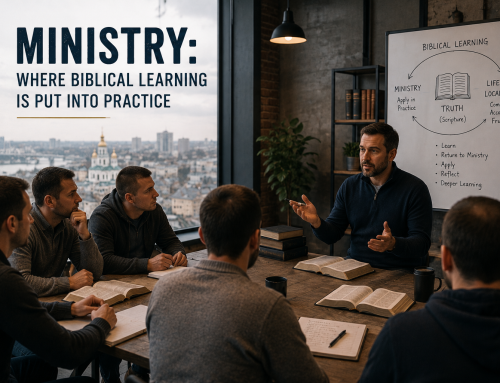
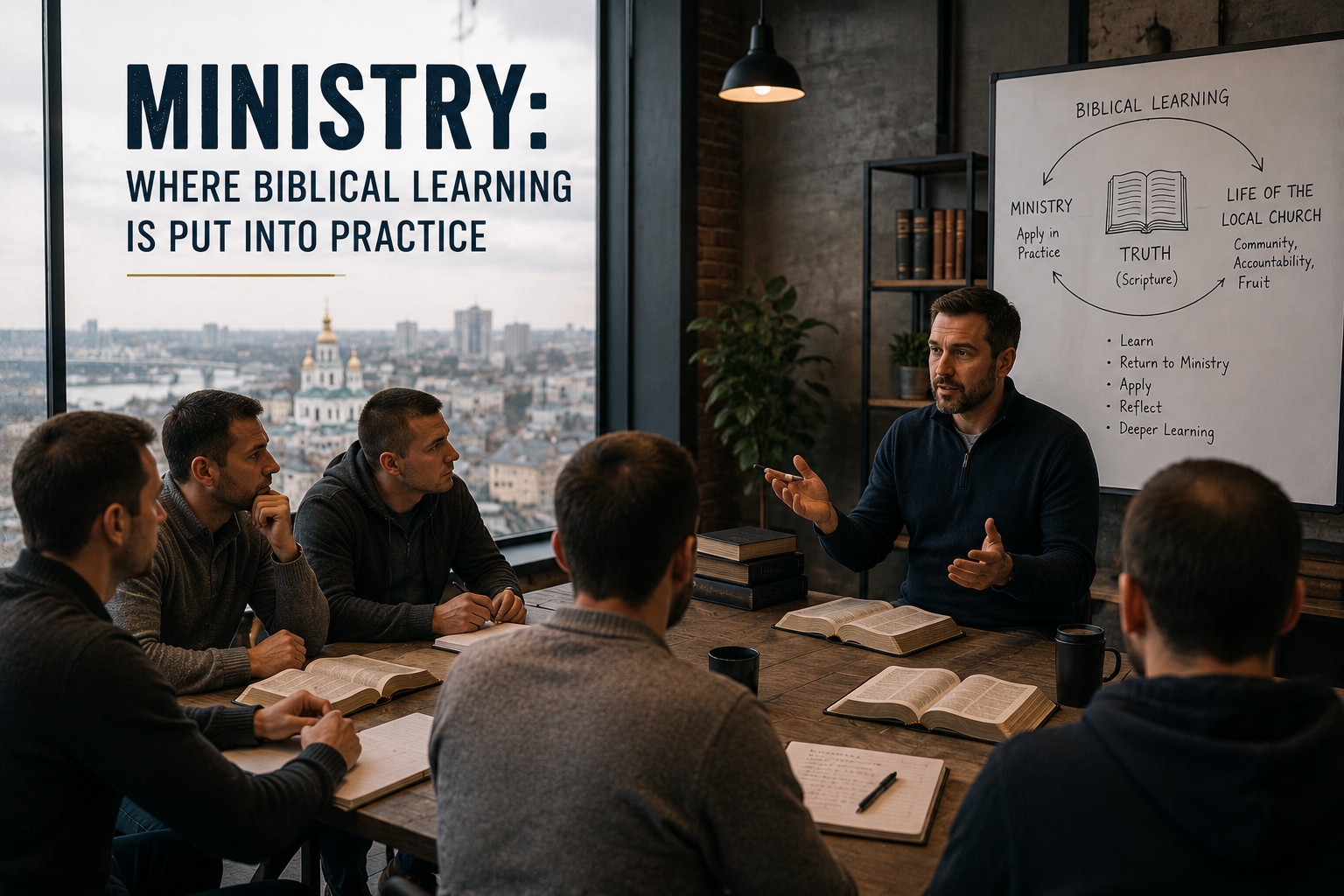
The more important question is what happens when the module ends. The pastor goes home and returns to his congregation. Sunday arrives, and he prepares another sermon. He counsels another struggling believer, meets with church leaders, disciples younger Christians, works through conflict, evangelizes, teaches, and leads. He encounters questions never asked during the course and circumstances that could never be fully reproduced in a classroom. Yet in all those situations, he carries what he has learned with him. The biblical learning received during the course begins to enter ministry as the pastor uses what he has learned to interpret Scripture, prepare sermons, counsel people, develop leaders, and make ministry decisions. Some concepts become clearer as he uses them. Other ideas prove more difficult to apply than he expected. New questions arise, and he discovers areas where he needs greater understanding. Ministry begins sending him back to Scripture.
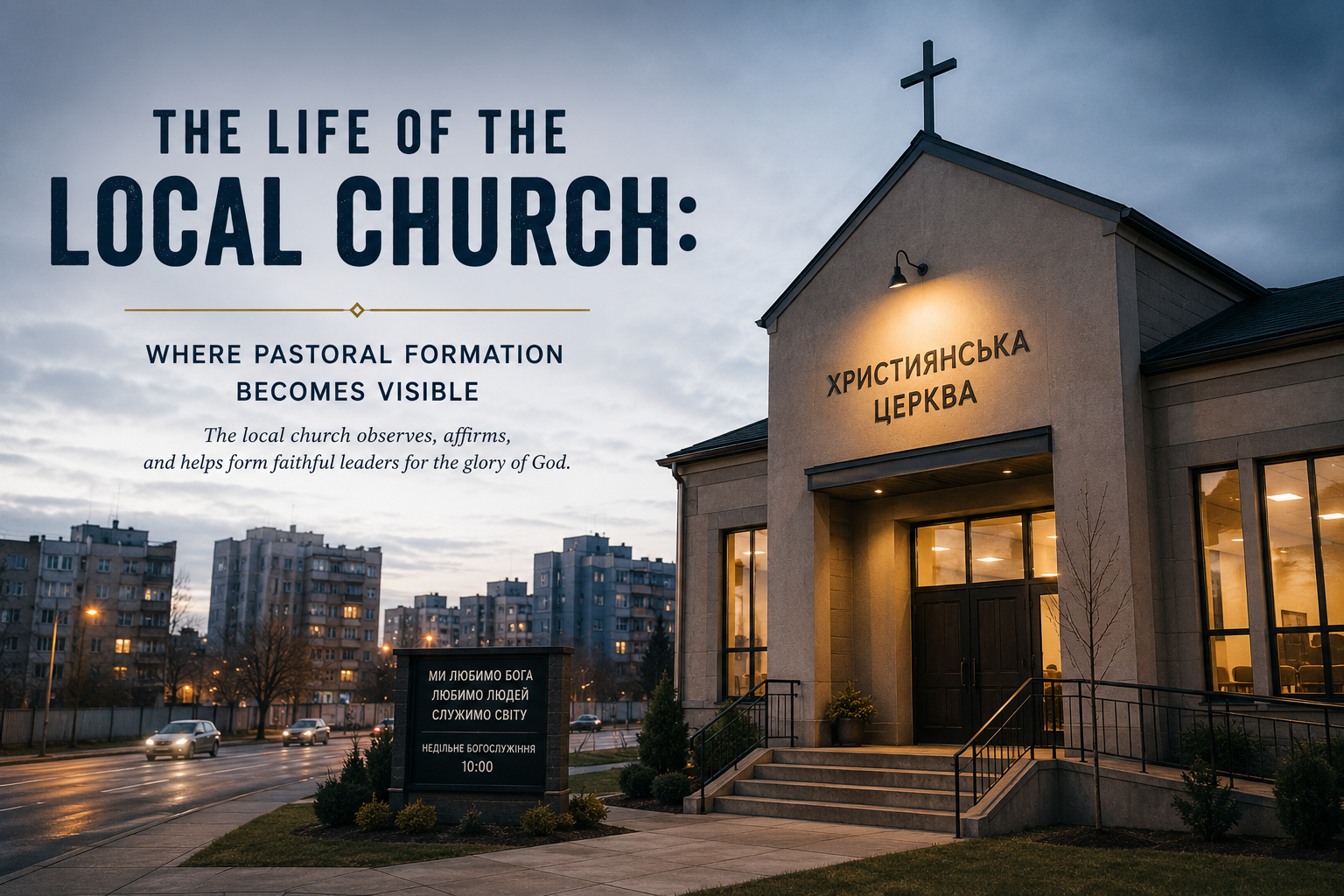
At the same time, the church enters the process. The congregation hears the sermons. Other leaders participate in the decisions. Church members receive the counseling and discipleship. They experience the pastor’s leadership and observe his life. Over time, they can see whether theological learning contributes to greater maturity and more faithful ministry. When the pastor later returns for another period of focused theological education, he is not the same student who left the previous module. He has ministered between those periods of instruction. He has attempted to apply what he learned, succeeded in some areas and struggled in others, and encountered new questions. His ministry experience has prepared him to hear the next course differently. Biblical learning moves into ministry, ministry creates new questions for biblical learning, and the local church becomes the context in which both are experienced. This is not a straight line in which one stage ends, and another begins. It is an ongoing relationship.
That distinction matters because we sometimes think about theological education primarily in stages. First, a person is educated; then he ministers. Under that model, education is preparation for something that will happen later. The student learns now so that he can eventually serve. That sequence may be appropriate in some circumstances, particularly for someone who has not yet entered vocational ministry, but many of the pastors I have had the privilege of teaching are already serving. They are not preparing to become pastors someday. They are pastors today. They already have congregations. They are already preaching, counseling people, discipling believers, leading churches, and making ministry decisions. Their need for theological education is not theoretical or distant. They need biblical and theological training precisely because they are already carrying significant ministry responsibilities. That changes the educational question. Instead of asking only, “What must this pastor know by the time he finishes this program?” we can also ask, “How can what he is learning today strengthen the ministry God has already given him?”
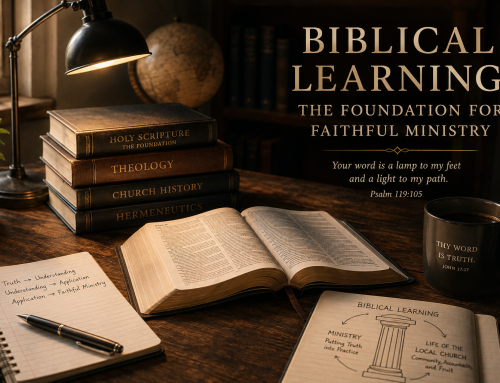
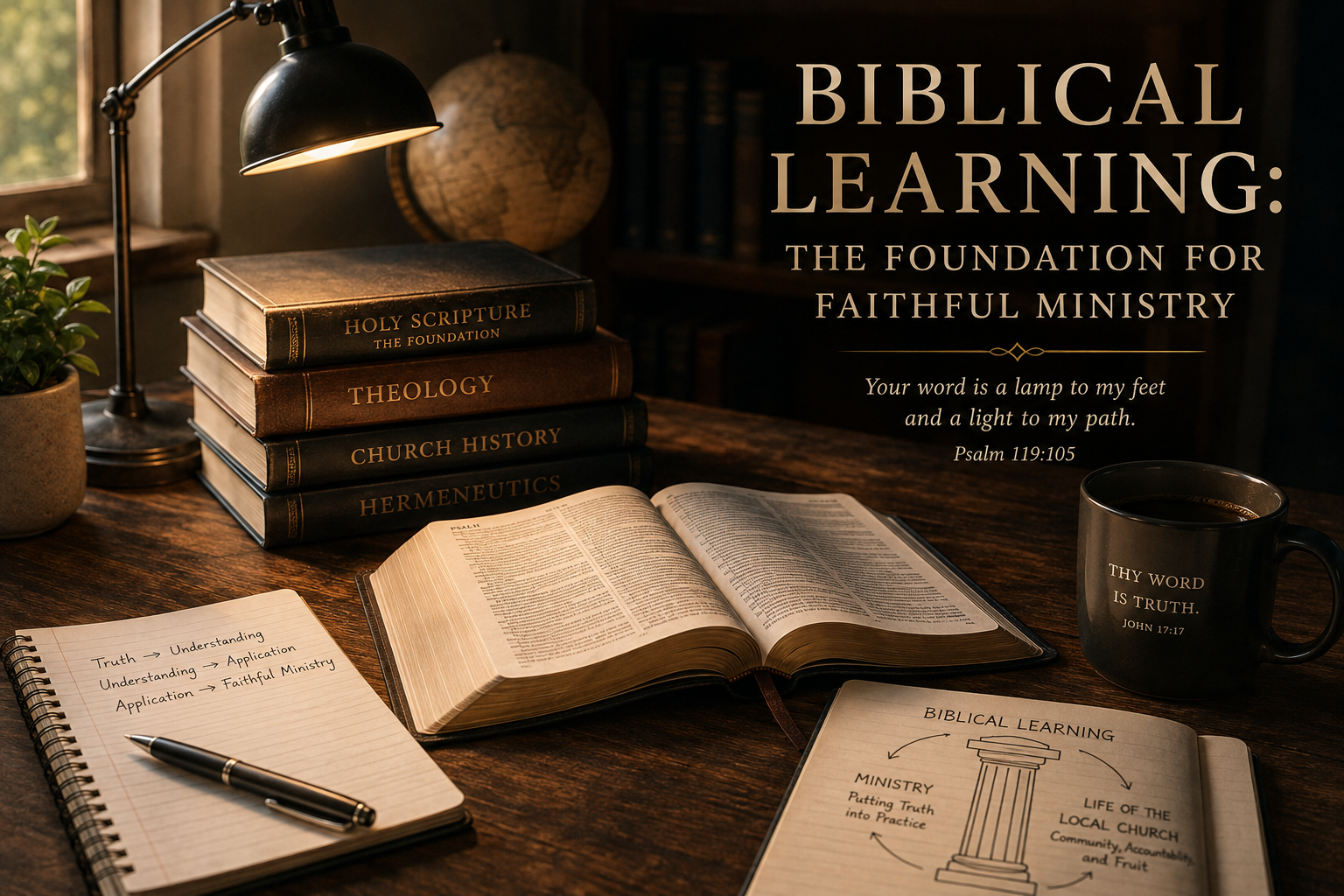
This helps us understand why biblical learning must remain central to the entire process. Integration does not mean that experience determines truth. The pastor does not decide what Scripture means based upon what seems to work in his congregation. Ministry does not become the authority, nor does the local church’s opinion. Scripture remains the foundation. Our theology, ministry practices, leadership philosophies, and church structures must continually be brought under biblical authority. At the same time, biblical learning should produce something. If a pastor’s theological education never affects his preaching, discipleship, leadership, character, or ministry decisions, we should ask what the education is accomplishing. Increased knowledge has value, but pastoral education is directed toward pastoral faithfulness. We are preparing men to handle the Word of God accurately and shepherd the people of God faithfully.
This is where ministry becomes indispensable. Ministry forces learning out of the abstract and places theological convictions into situations where choices must be made. The pastor cannot merely explain what Scripture teaches about forgiveness; he must help people walk through the painful process of forgiving one another. He cannot merely articulate a doctrine of the church; he must help an actual congregation function biblically. He cannot merely explain servant leadership; he must serve when he is tired, misunderstood, or unappreciated. He cannot simply describe biblical preaching; he must stand before God’s people week after week and faithfully proclaim the Word. Ministry tests whether knowledge can be faithfully integrated into life, and in the process, it often reveals where further learning and growth are needed.
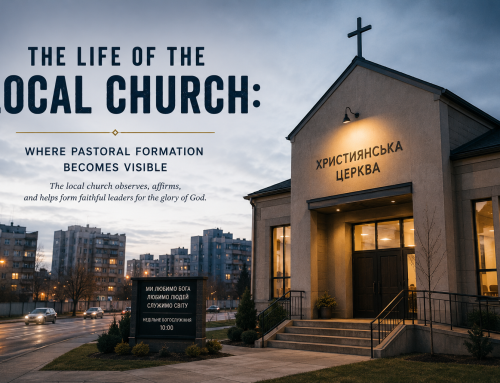
Yet even biblical learning and ministry together do not give us the entire picture. A pastor can overestimate his own growth, and a teacher can see only part of a student’s development. Pastoral formation needs community, which is why the local church matters so much. The New Testament descriptions of pastoral leadership make this difficult to ignore. When Paul discusses qualifications for overseers in 1 Timothy 3 and Titus 1, he describes qualities that require long-term observation. Being above reproach, self-controlled, hospitable, gentle, faithful in family life, and respected by others cannot be adequately demonstrated on an examination. Someone must know the man. Someone must observe his life and see what happens when theology moves beyond what he says and begins to shape who he is. The church provides that environment. This does not mean that every congregation will evaluate its pastor accurately or that congregational approval determines pastoral faithfulness. Churches can be wrong, and a faithful pastor may be criticized precisely because he is faithful. Scripture, not popular opinion, remains our authority. Nevertheless, the people who live, worship, serve, and minister alongside a pastor possess a perspective on his formation that theological educators should value.
When all three parts of the framework are functioning together, we begin to develop a much richer understanding of pastoral preparation. The teacher can say, “This is what we are teaching.” The pastor can say, “This is how I am putting it into practice.” The local church can say, “This is what we are seeing.” None of those perspectives is sufficient alone. The teacher can assess knowledge but cannot see every dimension of ministry and character. The pastor can describe his application but may not always assess himself accurately. The church can observe the pastor but may not know everything involved in his theological development. Each sees the process from a different vantage point, and together they provide a fuller picture of a ministry leader’s development.
This is also why I do not believe the relationship between theological education and the local church should be framed as a competition between churches and seminaries, or between formal and non-formal education. That is the wrong argument. Seminaries, Bible colleges, local churches, missions organizations, and modular programs can all contribute meaningfully to the development of ministry leaders. The more useful question is whether those contributions are working together toward the same biblical purpose. A seminary professor may provide theological expertise that a local pastor does not possess. A local church may provide relationships and ministry opportunities that no classroom can reproduce. A missions organization may provide cross-cultural experience and access to training that would otherwise be unavailable. A pastor may provide personal mentorship and observation that an academic institution cannot easily offer. We do not strengthen theological education by pretending that one of these contributions can replace all the others. We strengthen it by asking how they can work together to form faithful ministry leaders.
Ephesians 4 gives us a picture of that purpose. Christ gives leaders to His church to equip the saints for the work of ministry and to build up the body of Christ toward maturity. Second Timothy 2:2 gives us the pattern of truth being entrusted to faithful men who will be able to teach others also. Matthew 28 gives us the commission to make disciples, baptizing them and teaching them to observe everything Christ commanded. Taken together, these passages remind us that theological education is not ultimately about accumulating information or earning credentials. It is about equipping faithful people who can understand the truth, live the truth, minister the truth, and entrust that truth to others. Theological education serves the mission of the church when it prepares leaders not merely to possess biblical knowledge, but to use that knowledge faithfully in the service of Christ and His people.
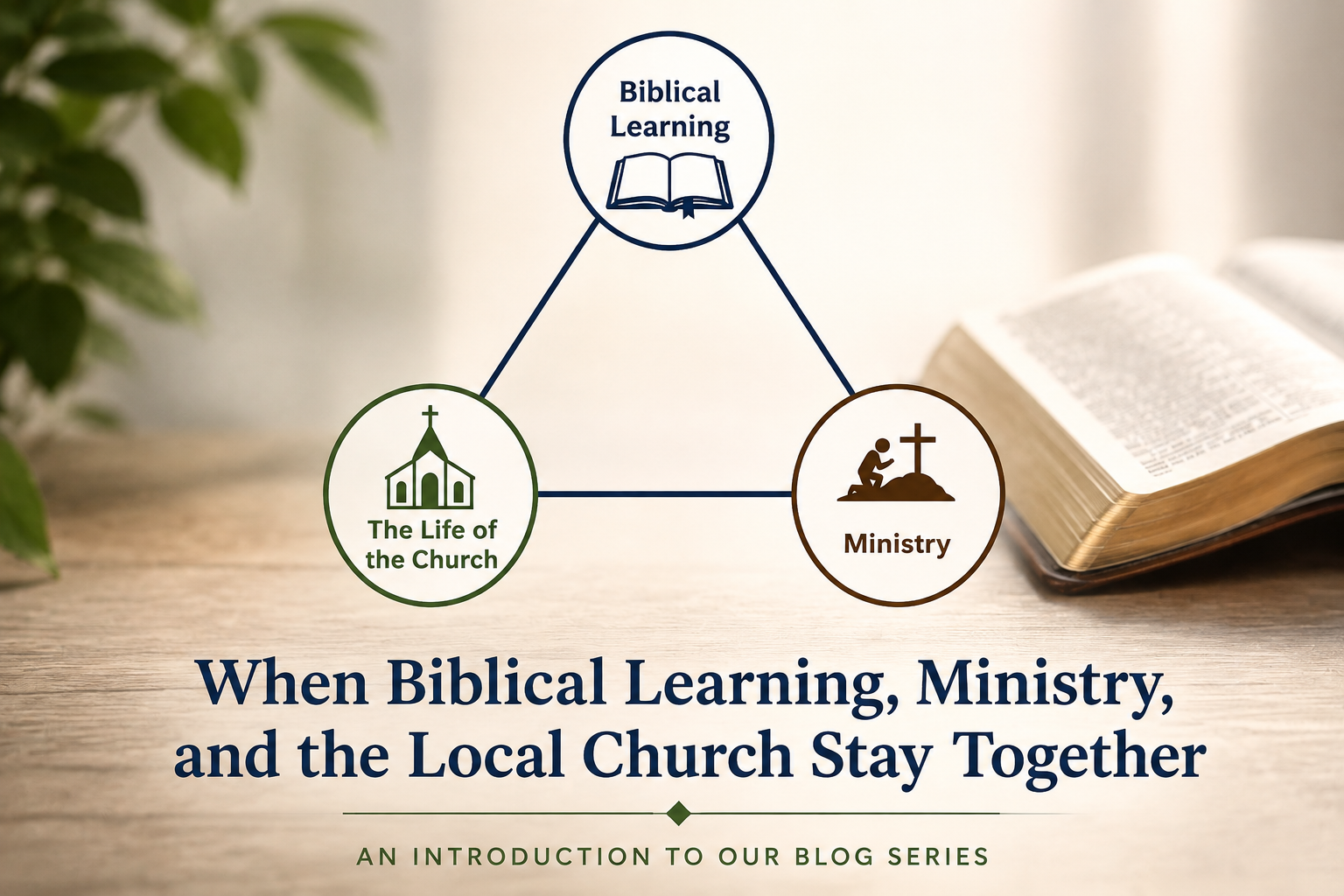
That is why the triangle matters. Biblical learning keeps ministry anchored to the truth of God’s Word. Ministry moves that learning into the actual work of shepherding and serving people. The life of the local church provides the community in which that learning and ministry are lived, observed, tested, encouraged, and multiplied. Remove biblical learning, and ministry can drift toward pragmatism as we become increasingly concerned with what works without adequately asking whether what we are doing is governed by Scripture. Remove ministry, and theological learning can become disconnected from the realities pastors are being prepared for. Remove the local church, and we lose one of the primary communities in which character, leadership, faithfulness, and spiritual maturity become visible. The three elements do different things, but that is precisely why they need one another.
When they remain connected, a pastor can study Romans and then preach Romans to his congregation. He can study ecclesiology and then wrestle with how biblical convictions should shape the church he serves. He can study discipleship and then invest what he is learning in another believer. He can return to future theological study carrying questions that emerged from real ministry. Through that entire process, his congregation can watch, encourage, challenge, and participate in his growth. The result is not simply a pastor who knows more. The goal is a pastor who is increasingly equipped to serve faithfully. That distinction captures what I believe theological education should pursue. We should care deeply about what pastors know, but we should also care about whether they can faithfully put that knowledge into practice and about what kind of leaders they are becoming among the people of God.
After two decades of working in theological education, this is the conviction to which I keep returning: biblical learning, ministry, and the life of the local church belong together. They are not competing approaches to pastoral preparation, nor are they three independent pieces that can simply be added to a curriculum. They are interconnected parts of forming faithful ministry leaders. Biblical learning provides the truth. Ministry provides the opportunity to live and communicate that truth. The local church provides the community in which that truth is lived, observed, and passed on to others. The strength of Modular Theological Education is not simply that pastors can receive training in shorter, concentrated periods or that teachers can take theological education to places where traditional programs may be inaccessible. Its deeper strength is the opportunity to keep these three realities connected: biblical learning, ministry, and the life of the local church. The strength is not found in choosing one over the others. It is found in keeping them together.