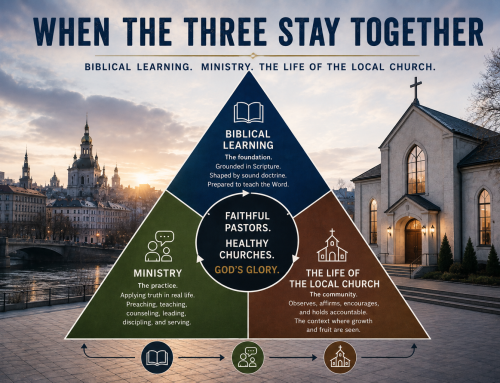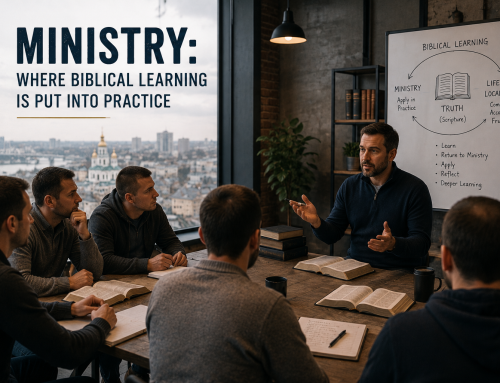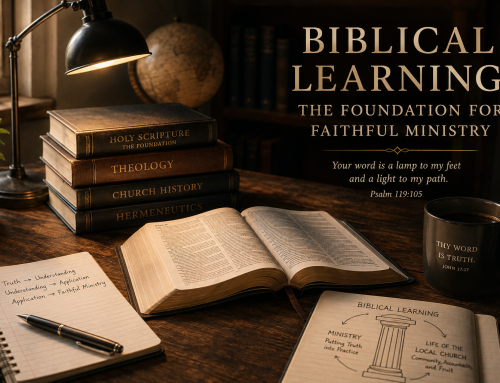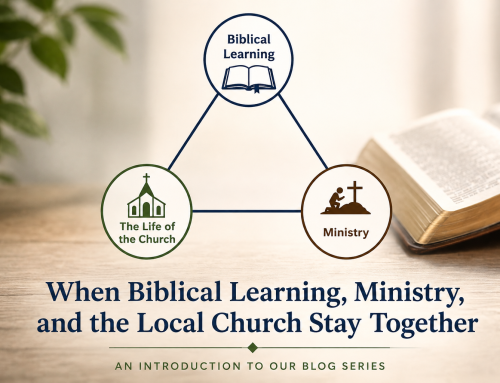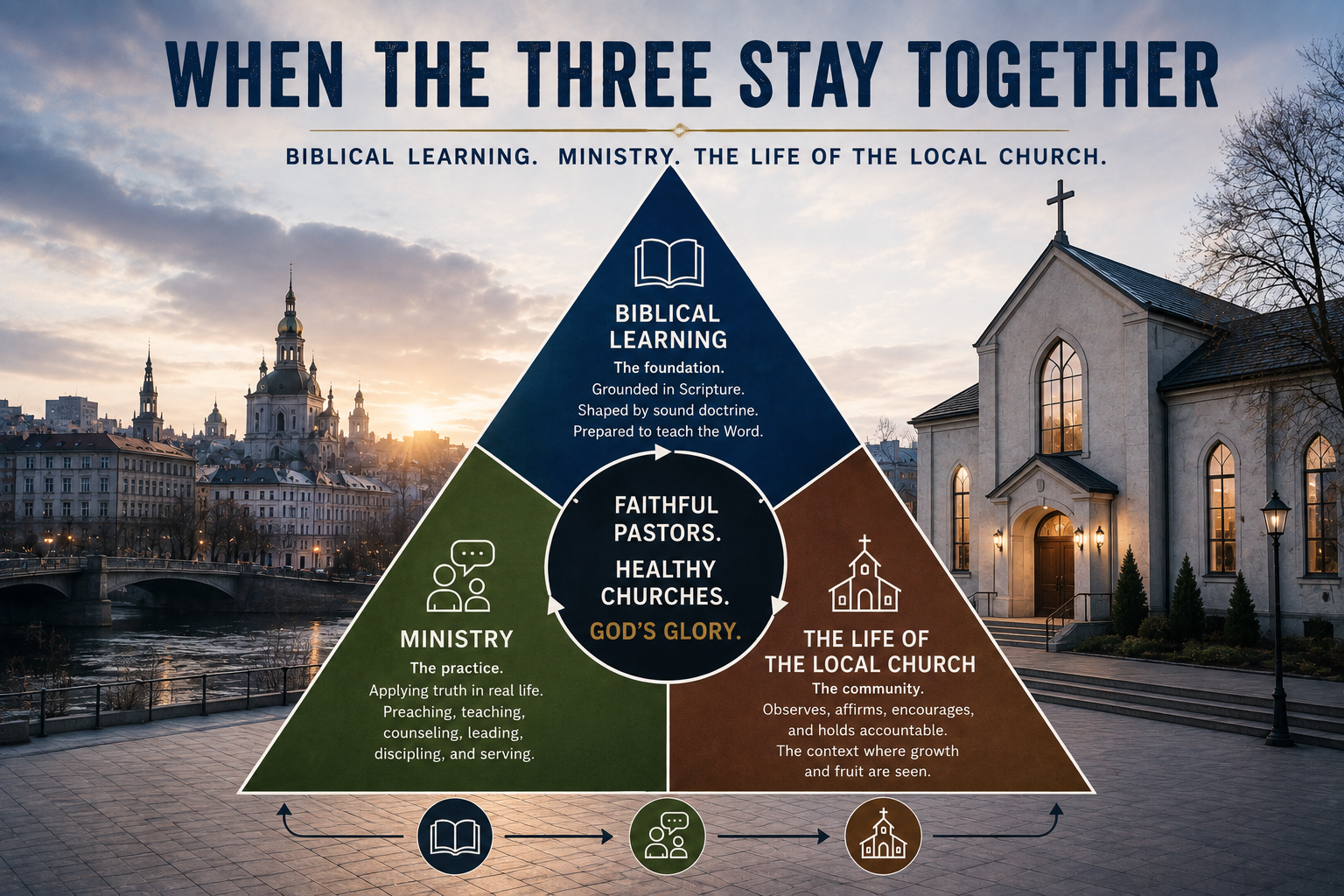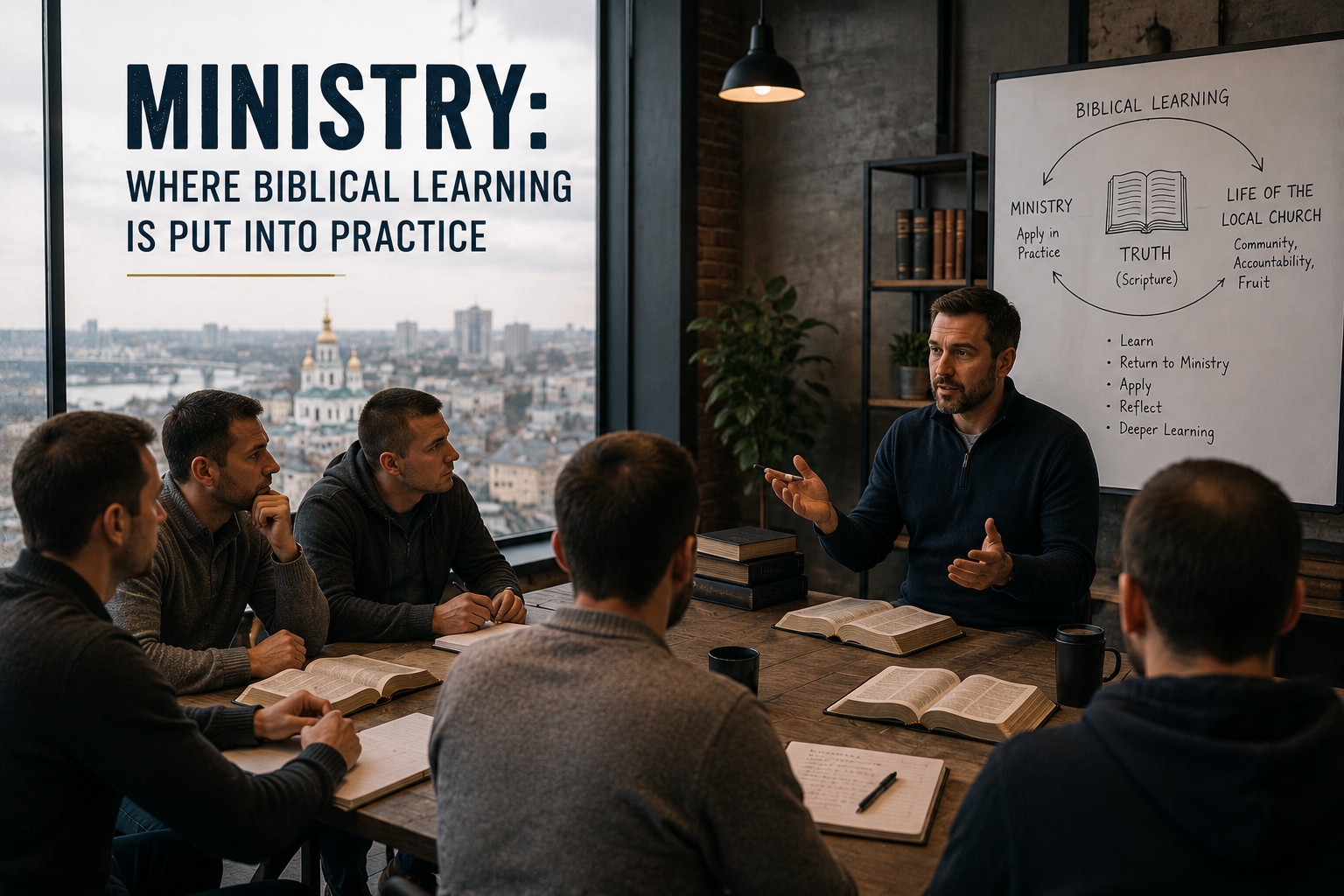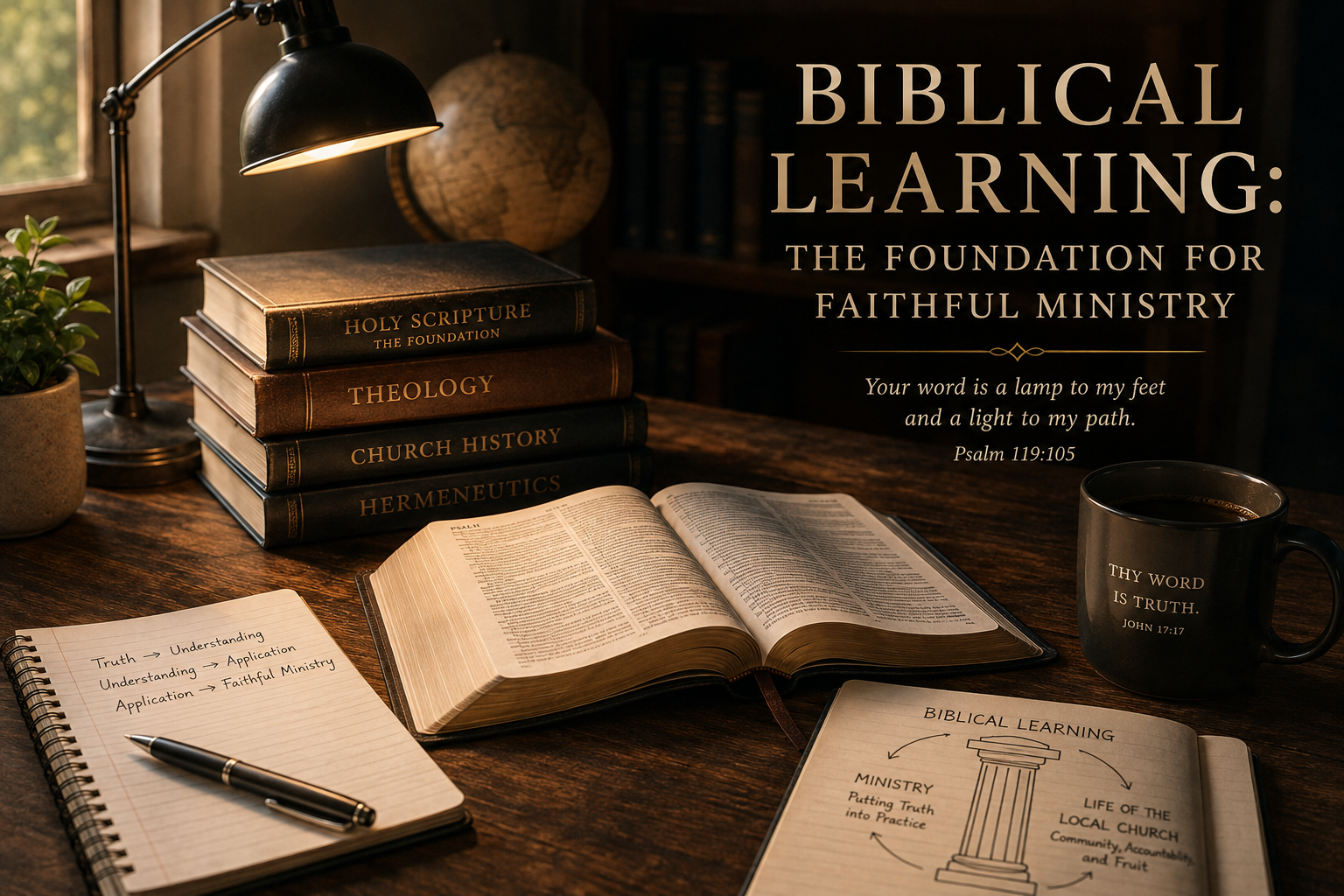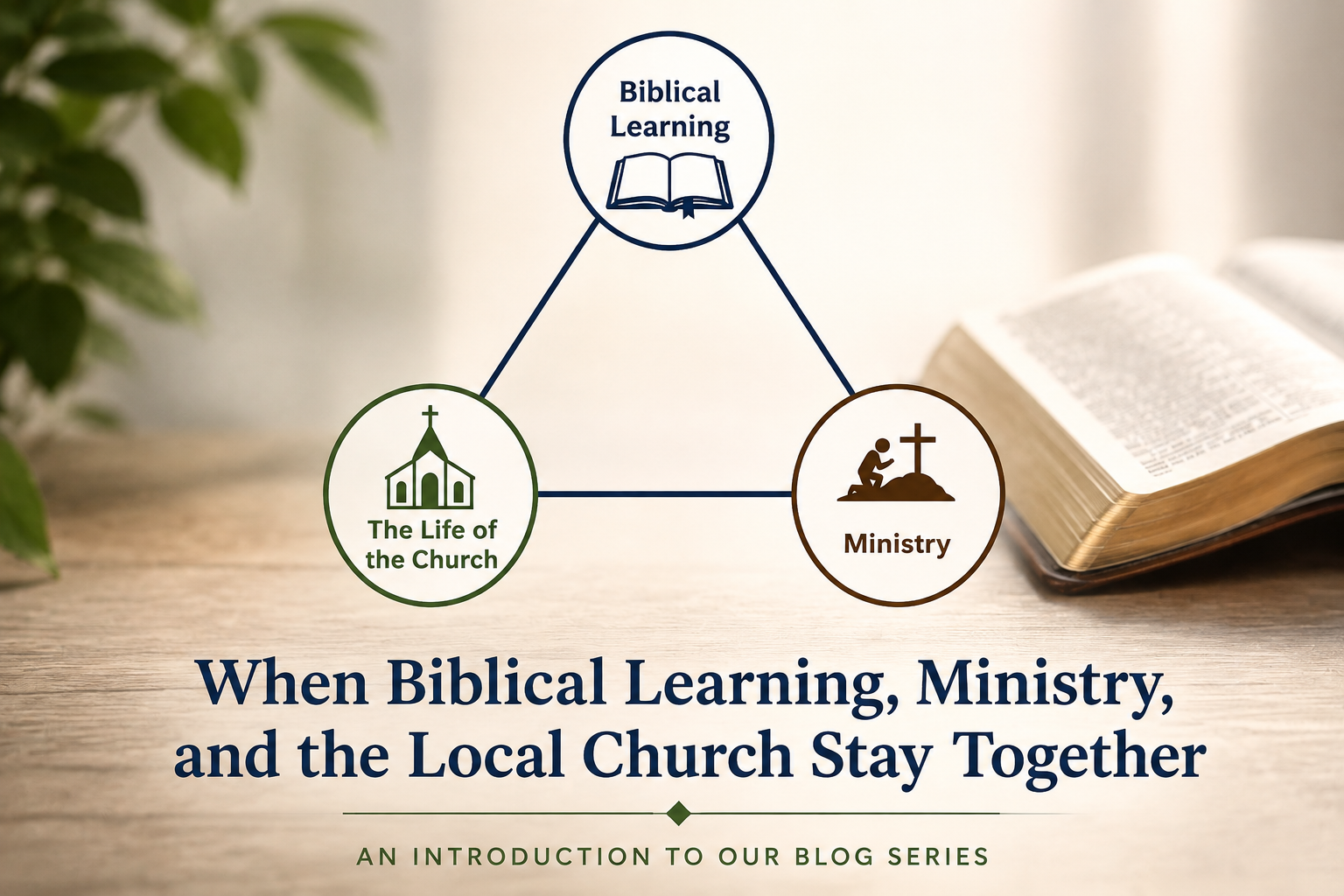
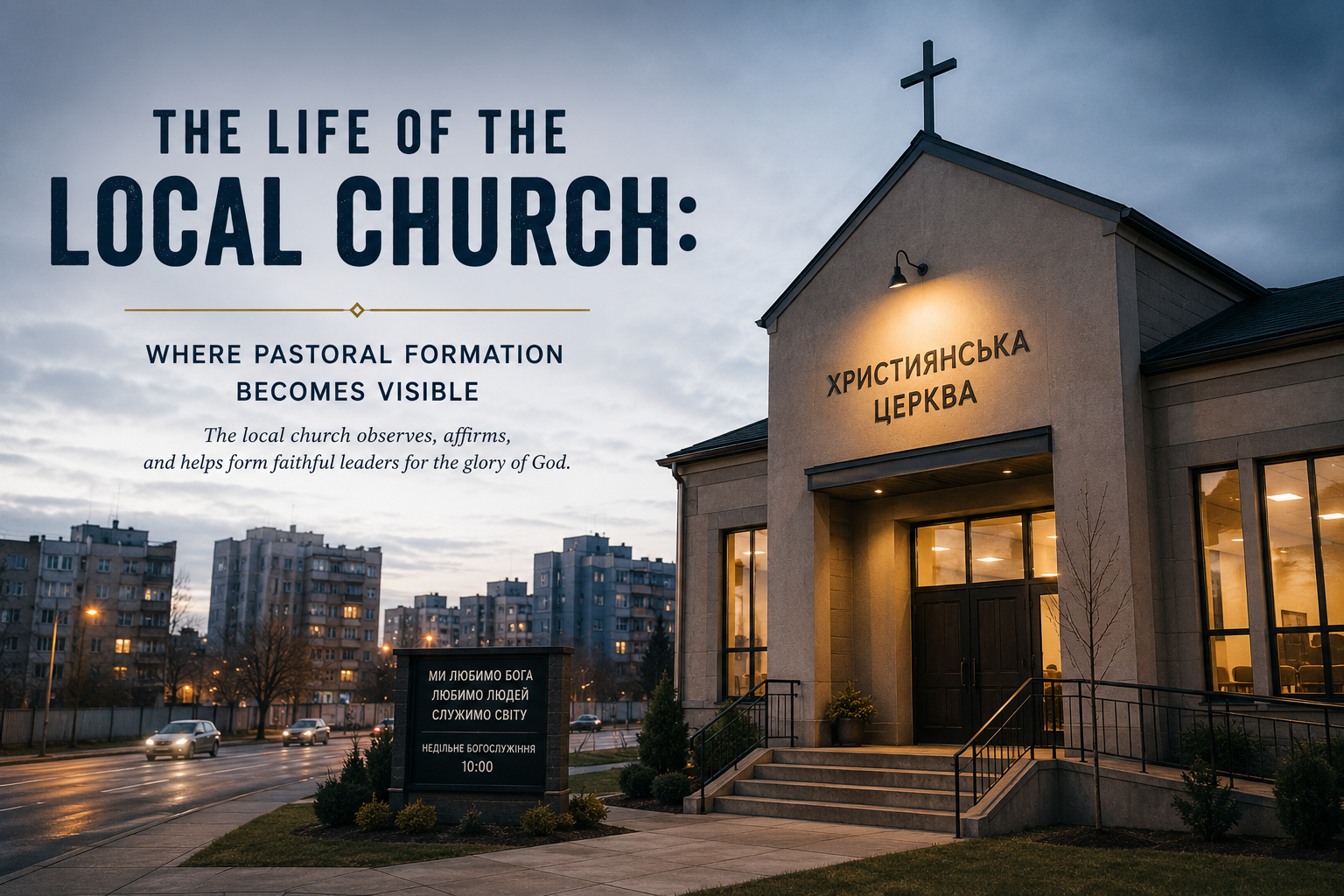
In the first two posts in this series, I have argued that biblical learning, ministry, and the life of the local church belong together in preparing pastors and ministry leaders. Biblical learning provides the foundation. Pastors need to know Scripture, understand sound doctrine, and develop the ability to think biblically. Ministry then provides the setting in which they put that learning into practice. The pastor preaches what he has studied, applies theology to pastoral problems, counsels people from Scripture, develops leaders, and learns to connect biblical truth with the realities of ministry. Yet a third part of this process remains, and in many discussions of theological education, I believe it receives far less attention than it deserves: the life of the local church.
The local church occupies a unique position in preparing a pastor because it sees what neither a professor nor the pastor himself can fully see. A theological educator can evaluate whether a student understands the material. Through papers, examinations, discussions, and assignments, the teacher can determine whether the student understands a doctrine, interprets a passage accurately, or can articulate a biblical position. The student, meanwhile, knows something about how he is attempting to put that learning into practice. He knows what he is trying to change in his preaching, leadership, counseling, and discipleship. But the congregation has another perspective. The church can observe what that learning is producing over time.
That distinction matters because pastoral formation involves more than acquiring knowledge or developing ministry skills. Scripture describes pastoral leadership in ways that include doctrine, character, relationships, reputation, faithfulness, self-control, hospitality, and teaching ability. When Paul describes the qualifications for overseers in 1 Timothy 3 and Titus 1, many of those qualifications cannot be adequately measured through an examination or classroom assignment. They become visible in the ordinary patterns of a person’s life. Is he self-controlled? Is he hospitable? Does he manage his household well? Is he gentle rather than quarrelsome? Is he above reproach? These are not merely ideas to be understood. They are qualities that must be observed.
The local church is particularly suited to make those observations because the church sees the pastor in the ordinary rhythms of ministry. Congregations hear sermons over years, not merely one carefully prepared sermon for a preaching class. They watch leaders navigate disagreements, disappointments, difficult personalities, financial pressures, ministry failures, and seasons of growth. They see how a pastor responds when a decision does not go his way. They know whether he listens. They see whether he treats people with patience and dignity. They experience whether he uses authority to serve others or primarily to advance his own ideas. They can observe whether the theology he teaches from the pulpit is reflected in the way he lives among them.
This is one reason I believe the local church should be understood as more than the destination of theological education. We sometimes speak about education as though the church is waiting at the end of the process. A student enters a school, receives his education, earns a degree, and then takes what he has learned into a congregation. That can certainly be a legitimate path into ministry. But it can also unintentionally suggest that theological education happens in one place and ministry happens somewhere else. The school prepares the leader, and the church receives the finished product.
The New Testament gives us reason to think more organically about the process. The church is not simply the place where trained leaders eventually work. It is itself an important context for recognizing, developing, testing, and affirming leaders. The pastoral qualifications in 1 Timothy and Titus assume that someone knows the person well enough to evaluate his life. Paul does not merely ask whether a potential leader understands theology. He asks questions about what kind of man he has demonstrated himself to be. That kind of evaluation requires proximity, relationships, and time. The church provides all three.
This has significant implications for how we think about theological education. If pastoral formation includes knowledge, character, and ministry competence, then no educational institution can adequately assess the entire process by itself. That is not a criticism of seminaries or theological educators. It simply acknowledges what a classroom can and cannot see. A professor may spend several hours each week with a student and know him well, but the professor still sees the student primarily within an educational environment. The church sees him within the environment of ministry and Christian community.
The difference can be substantial. A student may write an excellent paper on servant leadership while struggling to serve people when doing so is inconvenient. He may articulate a strong doctrine of the church while struggling to live in meaningful Christian community. He may explain the biblical qualifications of a pastor while displaying character weaknesses that are obvious to those who know him well. Conversely, a student whose academic performance is not exceptional may demonstrate remarkable faithfulness, humility, pastoral wisdom, and spiritual maturity in the congregation. Academic assessment tells us something important, but it does not tell us everything we need to know about a future or current pastor.
This is where the local church contributes something indispensable. It provides a living context for formation and observation. The church does not merely receive the pastor’s ministry; it participates in his development. People ask questions that force him to think more carefully. Difficult situations expose areas where he needs to grow. Mature believers offer counsel. Other leaders challenge his assumptions. Members respond to his preaching and teaching. Relationships reveal strengths and weaknesses that may remain hidden in more controlled environments. The ordinary life of the church becomes one place where theological education meets reality.
Ephesians 4 provides an important biblical framework for understanding this relationship. Paul explains that Christ has given gifted leaders to the church “for the perfecting of the saints, for the work of the ministry, for the edifying of the body of Christ.” The purpose is the body’s maturity. The leaders Christ gives do not exist independently of the church; their ministry is directed toward equipping God’s people so that the whole body grows. Pastoral development, therefore, should never become disconnected from the people the pastor is being prepared to serve. The ultimate question is not simply whether the pastor is becoming more knowledgeable. It is whether his growing knowledge and maturity are contributing to the growth and maturity of God’s people.
This provides an important way to think about the fruit of theological education. If a pastor is growing in his understanding of Scripture, we should expect that growth eventually to affect his preaching. If his understanding of discipleship is deepening, we should expect it to shape how he develops people. If his ecclesiology is becoming more biblical, we should eventually see those convictions reflected in the life and practices of the church. If he is growing in pastoral theology, we should expect that growth to shape how he shepherds people. The local church becomes one of the primary places where the effects of education can be seen.
That does not mean every change will be immediate or easy to measure. Spiritual formation is rarely that simple. Churches themselves can be unhealthy, resistant to change, or mistaken in their expectations of a pastor. Congregational approval is not the ultimate standard of faithful ministry. A pastor can be biblically faithful and still face criticism, opposition, or even rejection. Scripture, not congregational preference, remains the final authority. The point is not that the church always judges its leaders correctly. The point is that the church possesses a perspective on pastoral formation that should not be ignored.
This also protects us from defining pastoral effectiveness too narrowly. If our primary measurements are academic, we may conclude that the strongest student will necessarily become the strongest pastor. If our primary measurements are numerical, we may assume that the pastor of the fastest-growing church is necessarily the most effective. Scripture gives us a different picture. Faithfulness, sound doctrine, character, love, perseverance, wisdom, service, and the ability to equip others all matter. Many of these qualities become apparent only over time and within relationships.
That phrase—over time—is particularly important. Pastoral formation is not a short process. Character cannot be adequately assessed in a weekend. Spiritual maturity cannot be demonstrated through a single assignment. Faithfulness becomes visible through patterns. The local church provides an environment in which those patterns can emerge. A congregation that lives and ministers alongside a pastor for years can see changes that would be difficult for an outside evaluator to recognize. They may notice that his preaching has become clearer and more biblically grounded. They may see greater patience in his leadership. They may recognize increasing wisdom in the way he handles conflict or a growing ability to equip other leaders rather than doing everything himself.
This is one of the things I have appreciated about teaching pastors who remain in their churches while receiving theological education. Their congregations do not merely see the result. They see the process. The pastor returns from a course and begins working through what he has learned. Sometimes the change is visible in his preaching. Sometimes it shows up in how he organizes a ministry or approaches discipleship. Sometimes the growth is slower and more personal. But the church has an opportunity to experience theological education through the developing ministry of its own pastor.
The pastor in Latin America whom I mentioned at the beginning of this series gives us a helpful example. As his theological education deepened, the people in his congregation didn’t simply know he was taking classes. They experienced the results. They heard him teach through Romans after he had studied the book more deeply. They watched his continued development as a leader and teacher. As he pursued additional theological education, his learning continued to intersect with his church’s ministry. Eventually, even his doctoral work became focused on a ministry question connected directly to the congregation he serves. His church was not peripheral to his education. It was one of the principal places where that education was being put to work.
There is another dimension to this that we should not miss. The church does not merely evaluate the pastor; it helps form him. Pastors learn from the people they serve. They learn from mature believers who have walked with Christ longer than they have. They learn from people who ask questions they were not expecting. They learn from suffering saints whose faith challenges their assumptions. They learn from conflict, failure, reconciliation, funerals, weddings, baptisms, hospital visits, counseling conversations, and ordinary weeks of ministry that never appear in a syllabus. None of this replaces formal theological education, but it contributes to pastoral formation in ways formal education cannot duplicate.
This should create humility in both the theological educator and the pastor. The teacher has an important role, but the teacher is not solely responsible for forming the pastor. The pastor is responsible for his own growth, but he does not form himself in isolation. God uses Scripture, teachers, ministry experience, other leaders, and the congregation itself to develop those who shepherd His church. When we recognize that reality, theological education becomes less about transferring a complete package from an expert to a student and more about equipping a leader who is already being formed within the body of Christ.
For Modular Theological Education, this relationship is especially significant. One strength of the modular approach is that pastors do not necessarily have to leave their congregations to receive substantial theological training. They can remain within the communities where their calling, character, and ministry are already visible. They learn, return to their normal responsibilities, apply what they have learned, and continue growing among the people they serve. When the next period of focused instruction arrives, they bring those experiences back into the educational process.
The local church therefore becomes much more than a convenient location for ministry practice. It becomes part of the ecology of theological formation. The teacher contributes biblical and theological instruction. Ministry creates opportunities for application. The congregation provides relationships, observation, accountability, encouragement, and a real community in which the pastor’s growth has consequences. Each contributes something the others cannot fully provide.
This is why I am increasingly hesitant to talk about theological education as though it belongs primarily to educational institutions. Seminaries, Bible colleges, and theological training organizations play important roles, particularly in providing access to teachers, resources, disciplined study, and specialized knowledge. But preparing pastors ultimately concerns the church because pastors are being prepared to serve the church. Theological educators should therefore ask not merely how well students are performing academically, but how their education is connecting to the congregations and ministries in which they serve.
That brings us back to the simple progression that has guided this series. The teacher can say, “This is what we are teaching.” The pastor can say, “This is how I am putting it into practice.” The local church can say, “This is what we are seeing.” None of these perspectives is sufficient on its own. Together, however, they give us a much fuller picture of pastoral formation.
Biblical learning gives the pastor the truth he needs to understand and proclaim. Ministry gives him the opportunity to put that truth into practice. The life of the local church provides the community in which that learning and ministry become visible over time. The church hears the preaching, experiences the leadership, observes the character, and ultimately receives much of the fruit. That is why the church cannot simply be placed at the end of theological education. It belongs within the process.
We have now looked at all three sides of the framework individually: biblical learning, ministry, and the life of the local church. In the final post of this series, I want to bring them back together. The strength of this approach is not found merely in having all three somewhere in a ministry training program. The real strength is found in their integration—when biblical learning continually shapes ministry, ministry continually puts that learning into practice, and the local church becomes the community in which both are lived, observed, and multiplied.