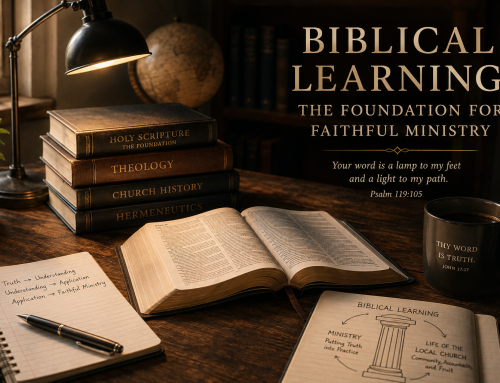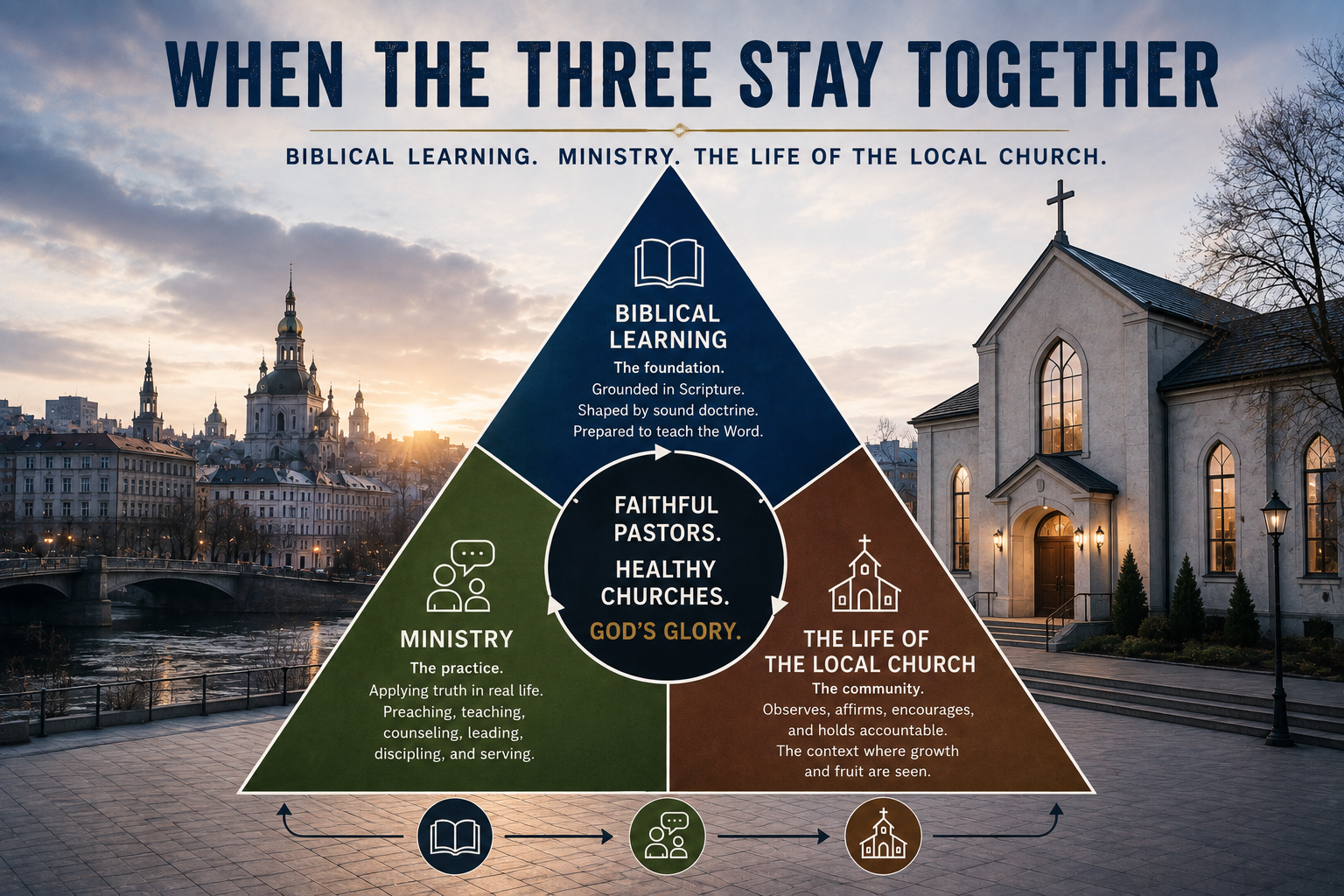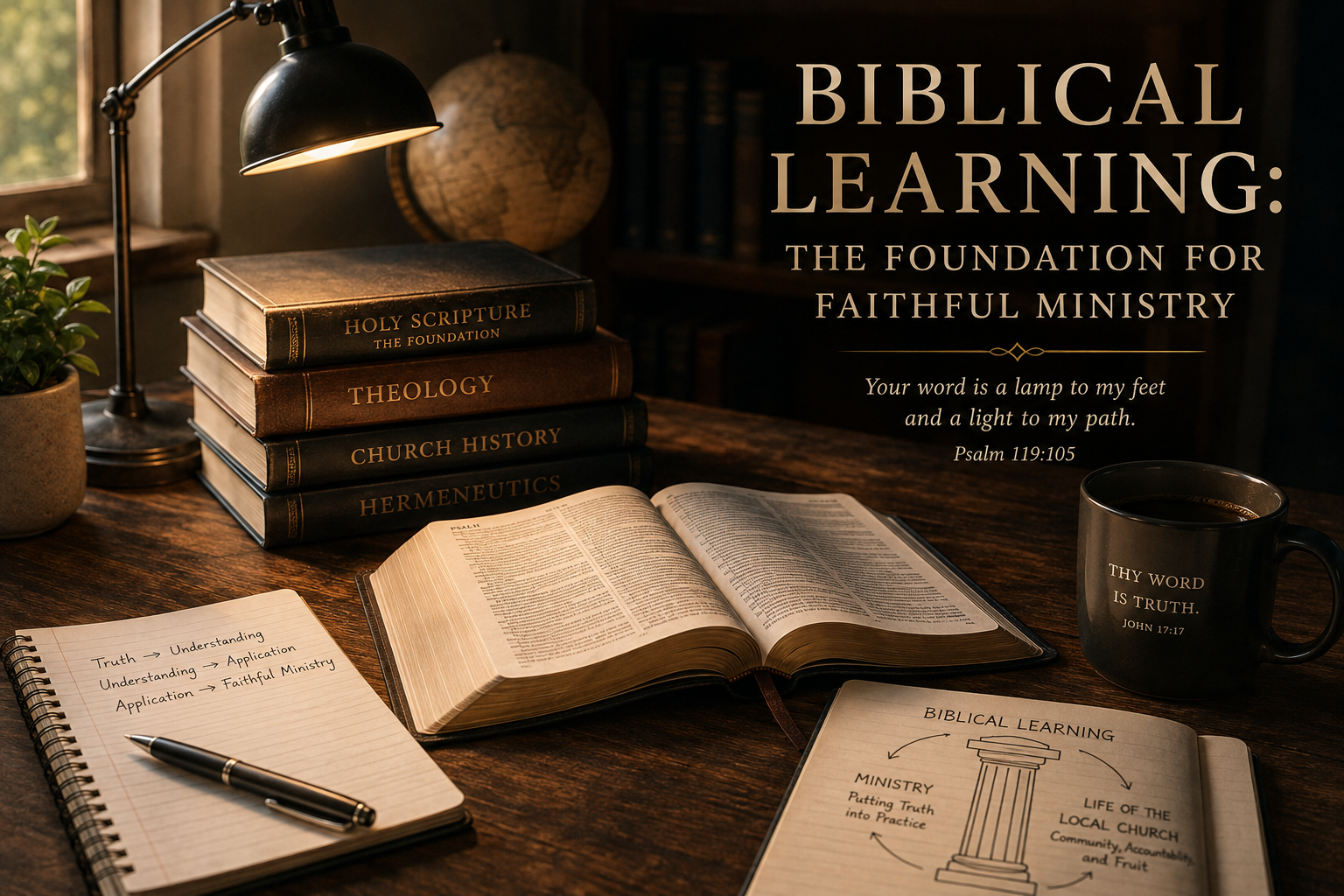
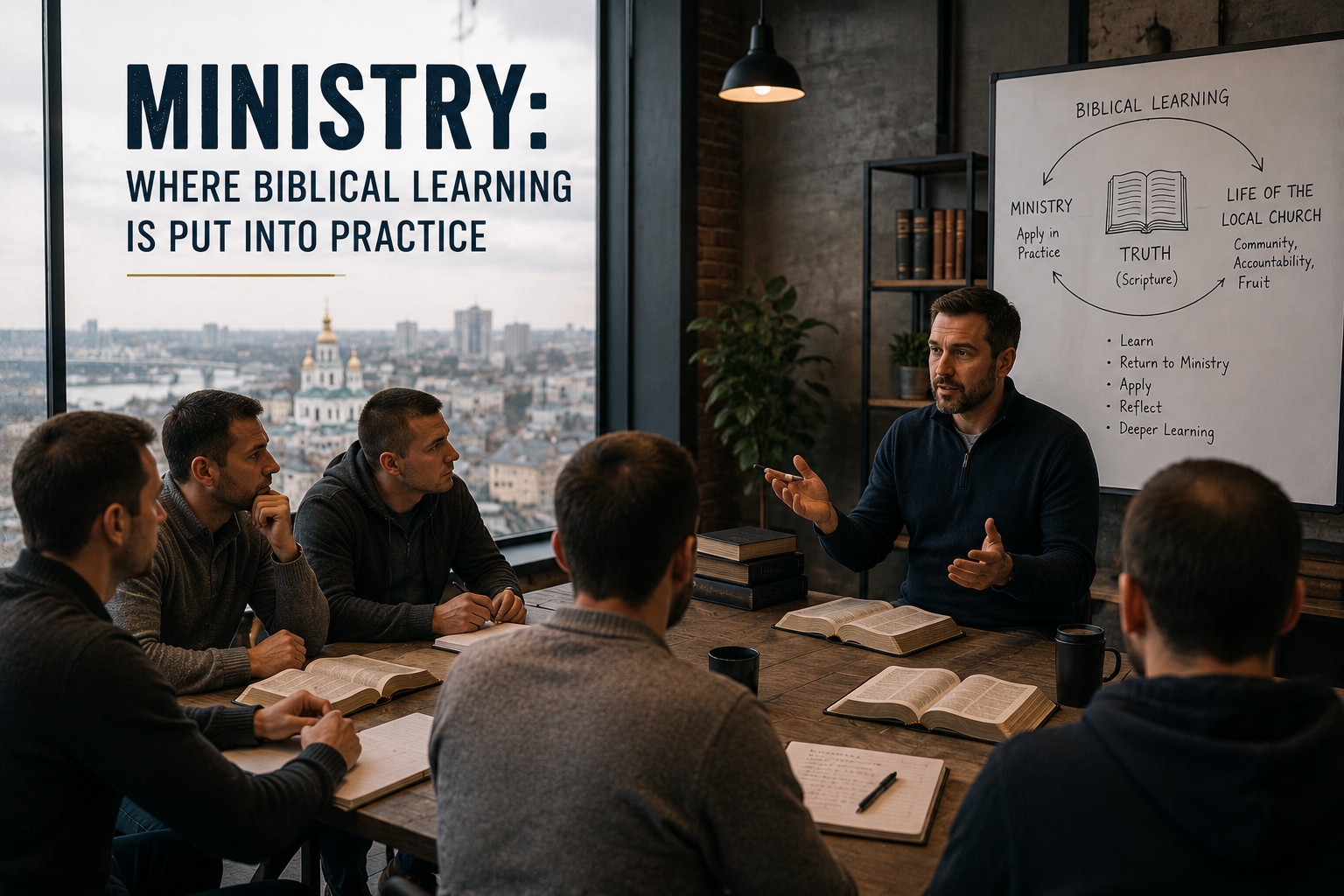
In the previous post, I argued that biblical learning must remain foundational to the preparation of pastors and ministry leaders. Christian ministry cannot be built merely on good intentions, leadership ability, experience, or practical techniques. It must be rooted in the truth of God’s Word. Pastors need to know Scripture, understand doctrine, and develop the ability to think biblically about the people and ministries God has entrusted to them. But if biblical learning is the foundation, it is not the final destination. The pastor is not called merely to know the truth. He is called to minister that truth to people.
This is where the second part of the framework becomes important: ministry. One of the great strengths of Modular Theological Education is that pastors and ministry leaders can continue serving while they are being trained. Their education does not require them to suspend ministry until their preparation is complete. Instead, learning and ministry can occur alongside one another. The pastor studies Scripture and theology, returns to the responsibilities of his church, and immediately begins encountering situations in which that learning must be applied. What was discussed in the classroom becomes part of preaching, counseling, discipleship, leadership, and the ordinary work of shepherding a congregation.
That relationship between learning and doing is more significant than it might initially appear. There is a difference between understanding an idea and demonstrating the ability to use it faithfully. We recognize this distinction in many areas of life. Someone may understand the principles of communication without being an effective communicator. A person may know a great deal about leadership while struggling to lead actual people. Likewise, a theological student may correctly explain a doctrine on an examination without yet knowing how that doctrine should shape ministry. Knowledge is indispensable, but knowledge becomes especially valuable when it is integrated into practice.
Pastoral ministry creates an extraordinary environment for that integration because ministry constantly demands application. Consider the pastor studying hermeneutics. In the classroom, he learns principles for interpreting Scripture carefully. He studies context, genre, authorial intent, grammatical relationships, and the importance of understanding a passage within the larger argument of a biblical book. Those principles matter. But their significance becomes particularly clear when that same pastor sits down later in the week to prepare a sermon. He now has an actual text in front of him and an actual congregation before whom he will stand. He must move from knowing principles of interpretation to interpreting Scripture faithfully.
The same thing happens with theology. A pastor can study the doctrine of suffering in a classroom and understand the biblical passages associated with it. But ministry eventually places him beside someone who is suffering. Suddenly the question is not simply whether he can define a theological position. He must determine how biblical truth should be communicated to a grieving family, a discouraged believer, or someone facing circumstances that seem impossible to understand. The doctrine has not become less important. It has become more important because now the pastor must know how to minister that truth with wisdom, compassion, and faithfulness.
Ecclesiology provides another example. A pastor may study the doctrine of the church and develop convictions about membership, leadership, discipline, ordinances, worship, and the responsibilities believers have toward one another. Yet those convictions eventually encounter real people and real circumstances. What happens when a church member falls into serious sin? How should leaders respond to conflict within the congregation? How should a church recognize new leaders? How should it care for members who are struggling? At that point, ecclesiology is no longer simply a chapter in a theology textbook. It becomes the theological framework through which a pastor shepherds an actual congregation.
This is why I believe active ministry should be viewed as more than the eventual outcome of theological education. Ministry can become part of the educational process itself. When pastors are serving while they are learning, ministry provides a place where theological understanding is practiced, tested, refined, and deepened. The pastor discovers what he understands clearly and where his understanding remains incomplete. Ministry raises questions that may never have occurred to him in the classroom. Those questions then drive him back to Scripture and, ideally, back into conversation with teachers and other ministry leaders.
This creates a cycle of learning that can be particularly valuable. The pastor learns something from Scripture, attempts to apply it in ministry, reflects upon that experience, and returns to further study with new questions. Learning informs ministry, but ministry also informs subsequent learning. It does not determine what is true; Scripture remains the authority. But ministry helps the student recognize the questions that must be asked of Scripture.
This is one of the reasons the periods between modular courses are so important. It would be easy to think that the primary educational activity occurs during the module itself. A teacher arrives, students gather, instruction takes place, and the course eventually concludes. If we think of education primarily as the transfer of information, then the time between courses may seem like little more than an interruption between periods of instruction. I have increasingly come to see it differently. Some of the most important learning may occur after the teacher leaves.
The pastor returns to his congregation carrying what he has learned with him. Sunday still comes. Sermons still need to be prepared. People still need counseling. Leaders still need development. Conflicts still arise. Disciples still need to be made. The church continues its ministry, and the pastor begins using what he has learned in the environment for which he was learning it in the first place. By the time another module begins, he does not return merely with additional ministry experience. He often returns with better questions.
Those questions matter. A student who has never attempted to apply a concept may ask, “What does this mean?” A pastor who has attempted to apply it may return asking, “What does this mean here?” or “How should I think biblically about what happened when I tried this?” The second set of questions reflects a different level of engagement. The pastor is no longer merely receiving information. He is wrestling with the relationship between truth and practice.
In educational language, we might describe part of this process in terms of competency. Competency involves more than possessing information. It involves demonstrating that knowledge appropriately in practice. For ministry preparation, that distinction is particularly important. We do not simply want to know whether a pastor can explain biblical preaching. We want to know whether he can preach the Bible faithfully. We do not simply want him to describe discipleship. We want him to make disciples. We do not simply want him to articulate principles of pastoral care. We want him to care for people.
That does not mean every ministry competency can be measured easily, nor does it mean theological education should become purely vocational. Pastoral ministry cannot be reduced to a checklist of observable skills. Character, wisdom, spiritual maturity, theological discernment, and dependence upon God cannot be adequately captured by a simple performance assessment. Nevertheless, the distinction remains important. Christian ministry is something pastors actually do, and preparation for ministry should therefore include opportunities to practice what is being learned.
This helps explain why the relationship between teacher and student also changes when students are actively serving. The teacher is no longer speaking only to hypothetical ministry situations. Students bring actual pastoral questions into the learning environment. They have congregations, leadership challenges, discipleship responsibilities, and ministry decisions waiting for them. The theological educator can therefore help students make connections between biblical truth and situations they are genuinely facing.
There is an important caution here. Application must never be allowed to control interpretation. We do not begin with a ministry problem and reshape Scripture until it gives us the answer we want. Nor should ministry experience become an authority alongside Scripture. The direction must remain clear: Scripture governs ministry. Yet faithful application requires us to understand both the biblical text and the ministry context in which that truth must be lived. The pastor must ask not only, “What does Scripture say?” but also, “How should I faithfully obey and teach what Scripture says in this situation?”
Second Timothy 2:2 again provides a useful picture. Paul reminds Timothy of the things he has heard and instructs him to entrust those truths to faithful people who will be able to teach others also. The movement is difficult to miss. Truth is received, entrusted, and then taught again. Learning moves toward ministry and multiplication. Timothy is not simply accumulating what Paul taught him. He is responsible to do something with it by investing it in others who will continue the process.
We see a similar pattern in the Great Commission. Jesus commands His followers to make disciples, baptize them, and teach them to observe everything He commanded. The language is significant. Jesus does not merely command the transmission of information. His disciples are to teach others to observe what He commanded. Biblical instruction is directed toward obedient discipleship. Christian teaching aims at lives increasingly shaped by the truth being taught.
That principle should affect the way we think about pastoral education. If the goal is simply to increase theological knowledge, then the classroom may be sufficient for much of what we are trying to accomplish. But if the goal is to prepare faithful pastors who can teach, shepherd, lead, counsel, disciple, and equip others, then actual ministry becomes extraordinarily important. We need environments where theological truth encounters the realities of serving people.
This is also why mistakes can become an important part of learning. No pastor applies everything perfectly the first time. A sermon may fail to communicate an idea clearly. A leadership decision may reveal that the pastor did not adequately understand the people involved. An attempt at discipleship may expose weaknesses in his approach. These moments are not necessarily evidence that education has failed. Properly evaluated, they can become opportunities for deeper formation. The pastor can reflect upon what happened, return to biblical principles, seek counsel, and approach the situation with greater wisdom in the future.
For that reason, theological education should not create the impression that the educated pastor is the pastor who possesses all the answers. In many ways, good theological education should produce the opposite effect. The more deeply a pastor understands Scripture and ministry, the more aware he becomes of the complexity of shepherding people faithfully. He learns to ask better questions. He recognizes when he needs counsel. He becomes more careful about applying biblical principles to complicated situations. Education should produce theological conviction, but it should also produce humility.
Over the years, I have watched this process take place among pastors in different parts of the world. A doctrine taught during a module appears later in a sermon. A discussion from the classroom becomes part of a discipleship conversation. A principle of biblical interpretation changes how a pastor prepares his messages. A theological concept gives a leader a new way to think about a problem in his congregation. These may not be dramatic moments, but they represent something important. Biblical learning is moving into ministry.
That movement is central to Modular Theological Education. The modular schedule makes it possible for pastors to receive focused periods of theological instruction without permanently leaving the places where they serve. But the value of the model is not simply that it is convenient or accessible. Its greater potential lies in the relationship it creates between periods of learning and periods of active ministry. The student does not have to wait until his education is finished before beginning to apply it. He can learn and serve simultaneously.
This also means we should resist thinking about graduation as the moment when ministry finally begins. For many pastors participating in theological education, ministry began long before the first course and continues throughout the entire program. Their churches are not waiting for them to become ministers. They are already preaching, counseling, discipling, evangelizing, and leading. The question is how theological education can strengthen the ministry they are already doing.
That changes the way we understand the relationship between education and ministry. The classroom is not preparation for some distant future reality. It is equipping a pastor for responsibilities he may face that very week. The pastor can study on Tuesday and preach on Sunday. He can learn a theological principle during a module and discuss it with his leaders when he returns home. He can discover a weakness in his understanding of Scripture and begin correcting it immediately. The distance between education and application becomes very short.
But there is still a missing piece. A pastor can receive excellent biblical instruction and actively apply it in ministry, yet we still need to ask how we know whether that learning is actually shaping him as a pastor. Who observes his character? Who sees his leadership over time? Who can recognize whether his preaching is becoming more faithful, his relationships healthier, and his ministry more mature?
That is where the third part of the framework becomes indispensable.
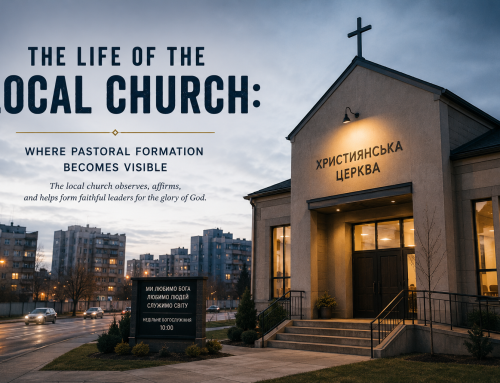
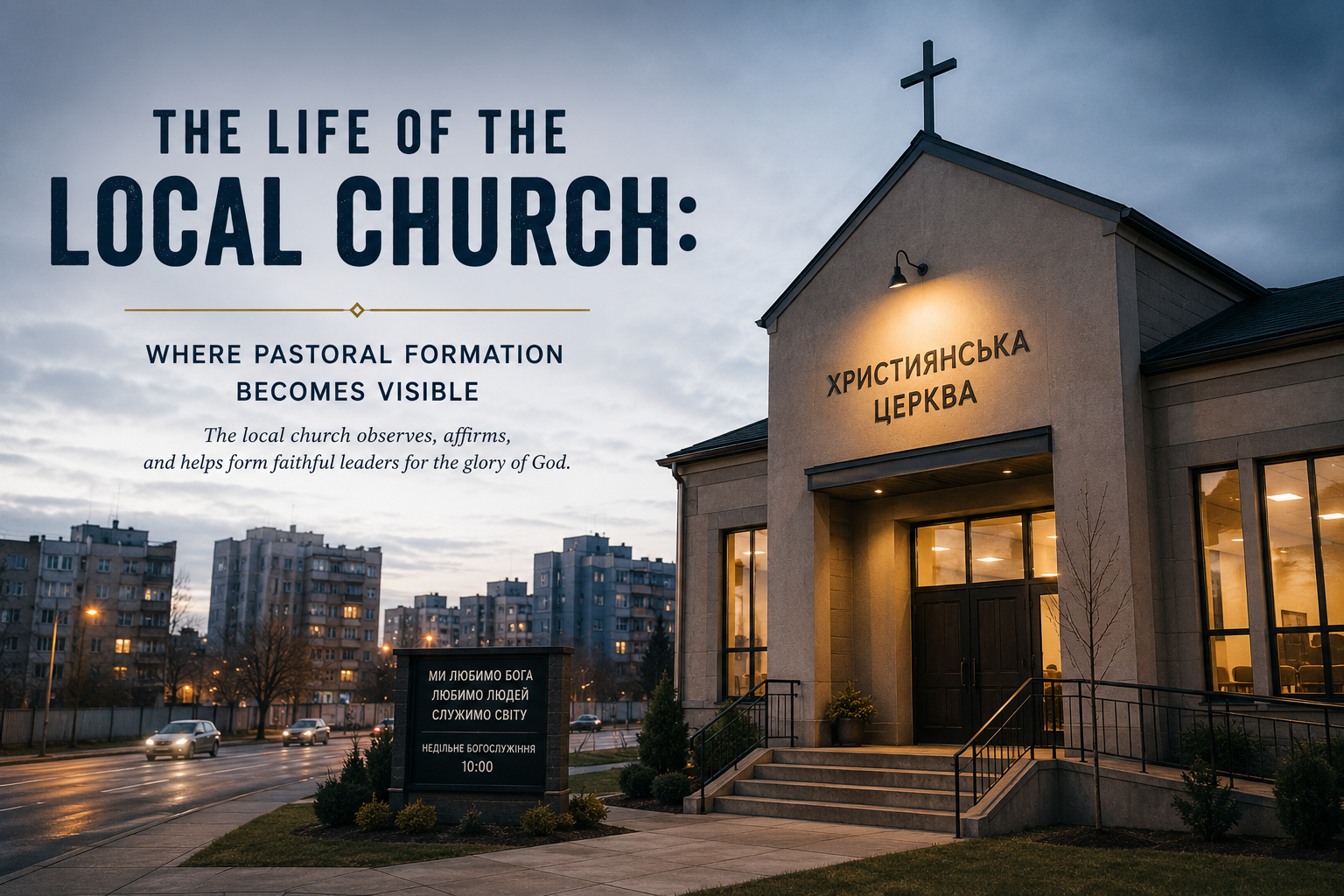
The pastor does not learn and minister in isolation. He serves among the people of God. His congregation hears his preaching, experiences his leadership, receives his pastoral care, and observes his life. The local church therefore becomes more than the place where ministry happens. It becomes a community in which pastoral growth can be seen.
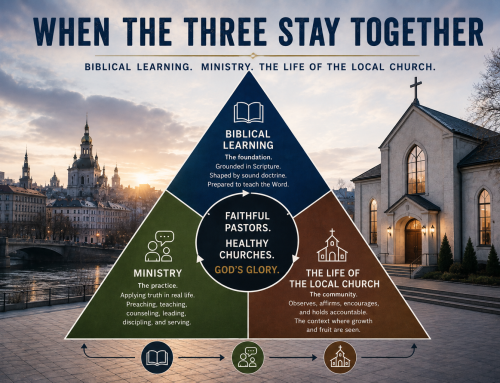
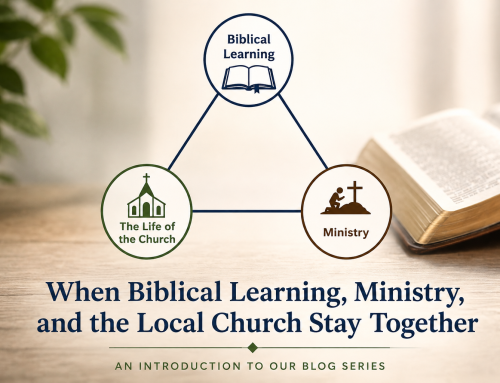
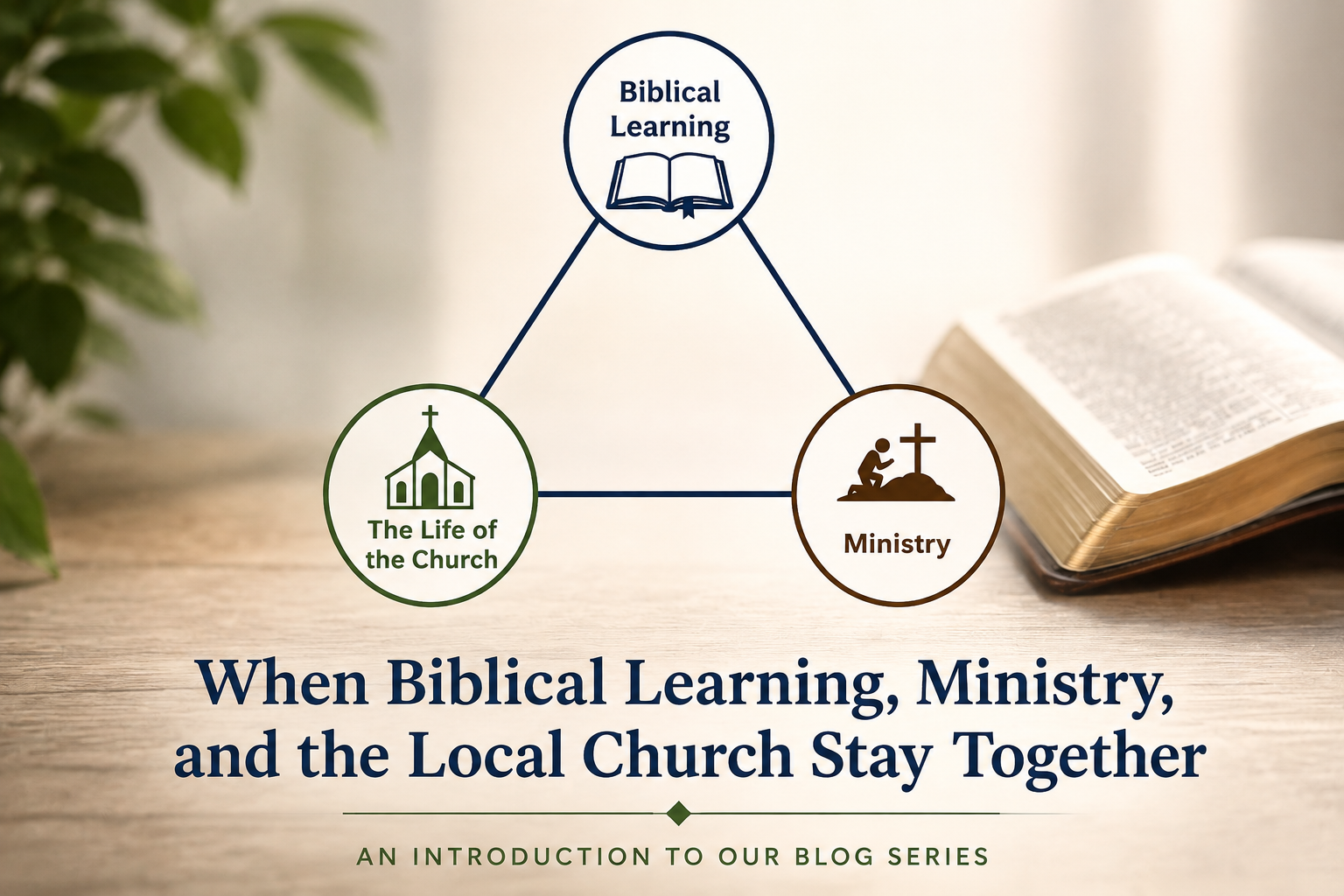
Biblical learning provides the foundation. Ministry puts that learning into practice. But the life of the local church makes much of that growth visible.
That will be the focus of the next post.