Several years ago, I had the privilege of teaching a pastor in Latin America who was already faithfully serving his local church. He was educated, experienced in ministry, and committed to the people God had entrusted to him, but he had not had extensive opportunities for deeper theological education. Through a series of modular courses, he began studying theology and Scripture more intentionally. One of those courses focused on the book of Romans. He did not simply complete the course, put his notes on a shelf, and move on to the next subject. Instead, what he was learning began to make its way almost immediately into his ministry. After studying Romans, he began preaching through the book with his own congregation, eventually spending roughly a year working through its message with the people he served.
Over the years, I watched that pattern continue. His theological education deepened, but so did his ministry. He pursued additional opportunities for formal theological study, eventually completing a Master of Divinity and later beginning doctoral work. Yet what has always struck me about his story is not the degrees he earned. It is the relationship between what he was learning and where he was serving. His education was not taking place in isolation from ministry. He was learning while pastoring, teaching, preaching, discipling, and leading. His church was not waiting for his education to be completed before benefiting from it. They were experiencing the fruit of that learning along the way.
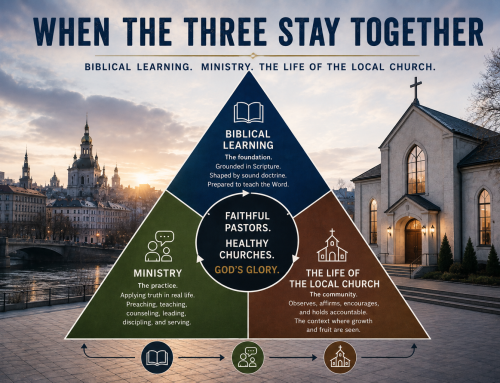
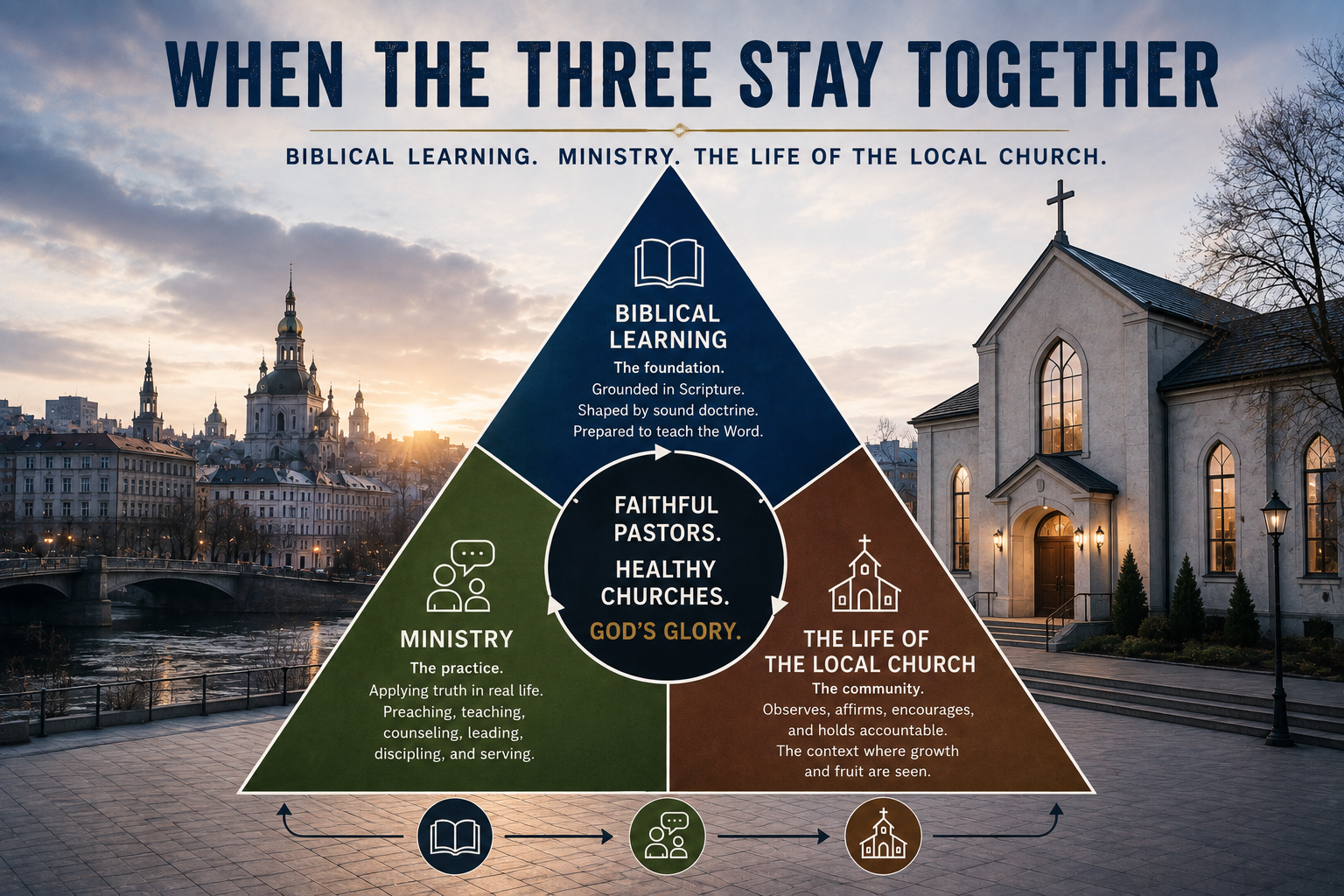
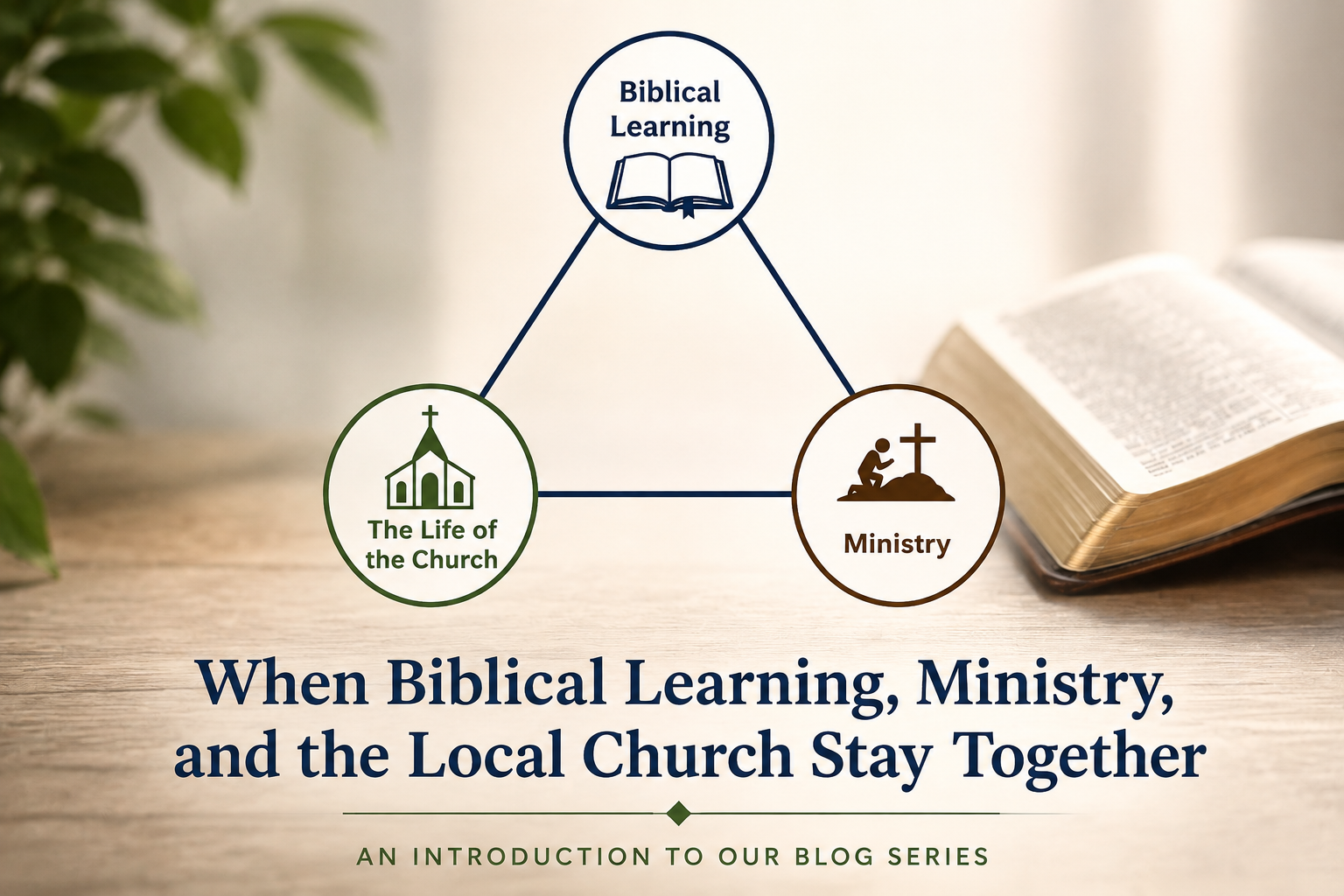
Experiences like this have gradually shaped the way I think about theological education. There was never a single moment when the entire idea suddenly became clear to me. It developed over years of teaching pastors and ministry leaders in different parts of the world. Again and again, I saw the same basic relationship. Theological education seemed to be particularly powerful when three things remained connected: biblical learning, active ministry, and the life of the local church.
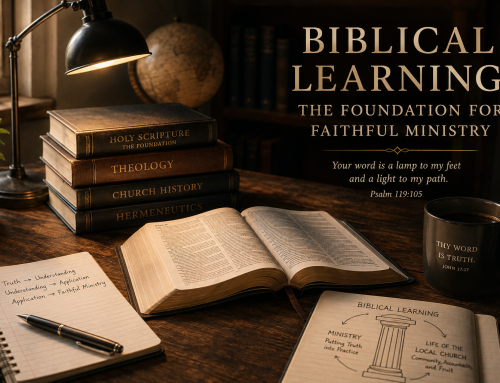
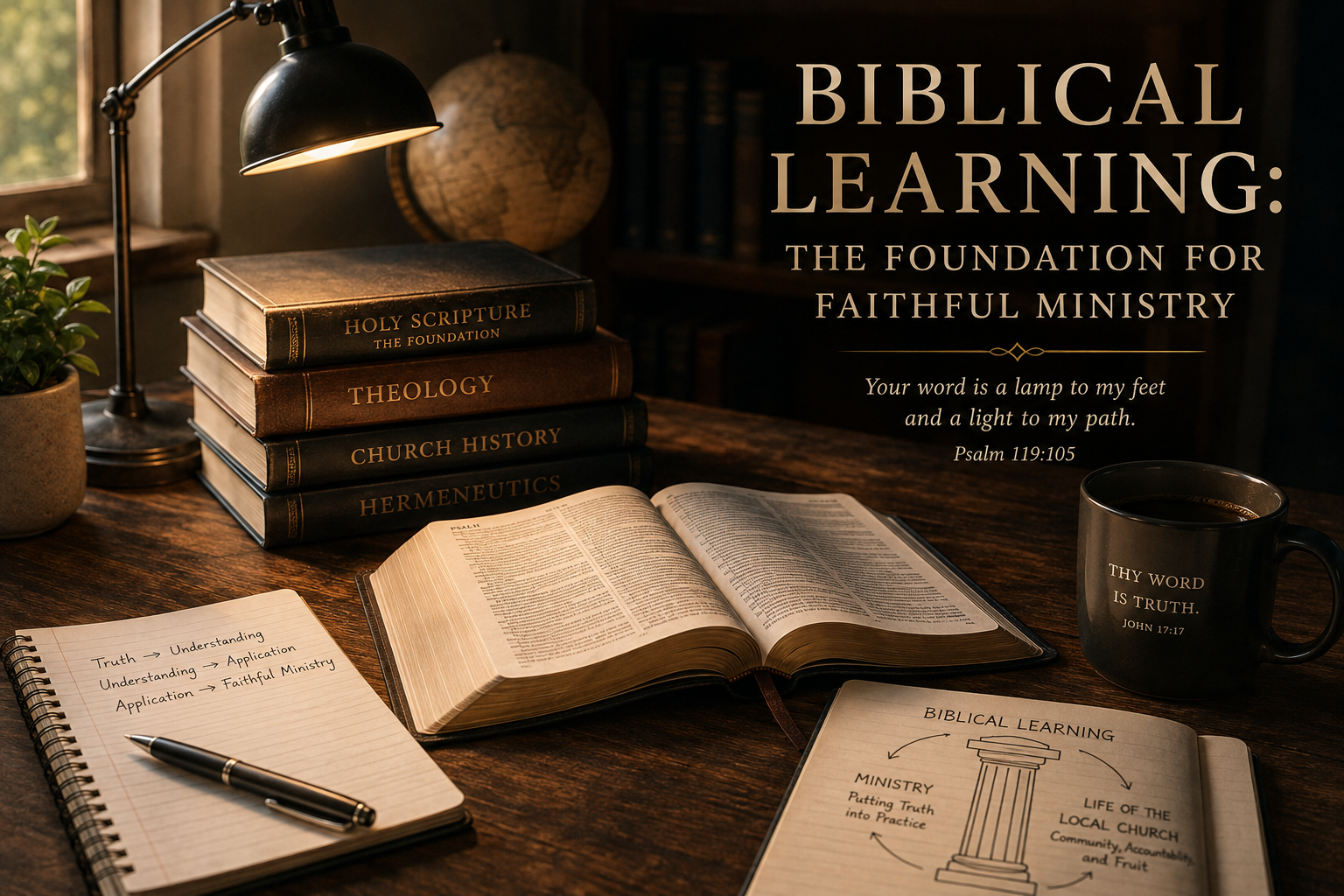
When we first begin thinking about theological education, biblical learning is usually the most obvious component. We ask important questions about what a pastor needs to know. What theology should he understand? How well does he know Scripture? Has he studied biblical doctrine, hermeneutics, church history, pastoral theology, or the individual books of the Bible? These are necessary questions because pastoral ministry must be grounded in truth. Practical skill cannot substitute for biblical understanding. A pastor may be gifted as a communicator, administrator, counselor, or leader, but those abilities cannot provide the theological foundation upon which Christian ministry must rest. Scripture must shape how he understands God, humanity, sin, salvation, the church, leadership, discipleship, and ultimately the purpose of ministry itself.
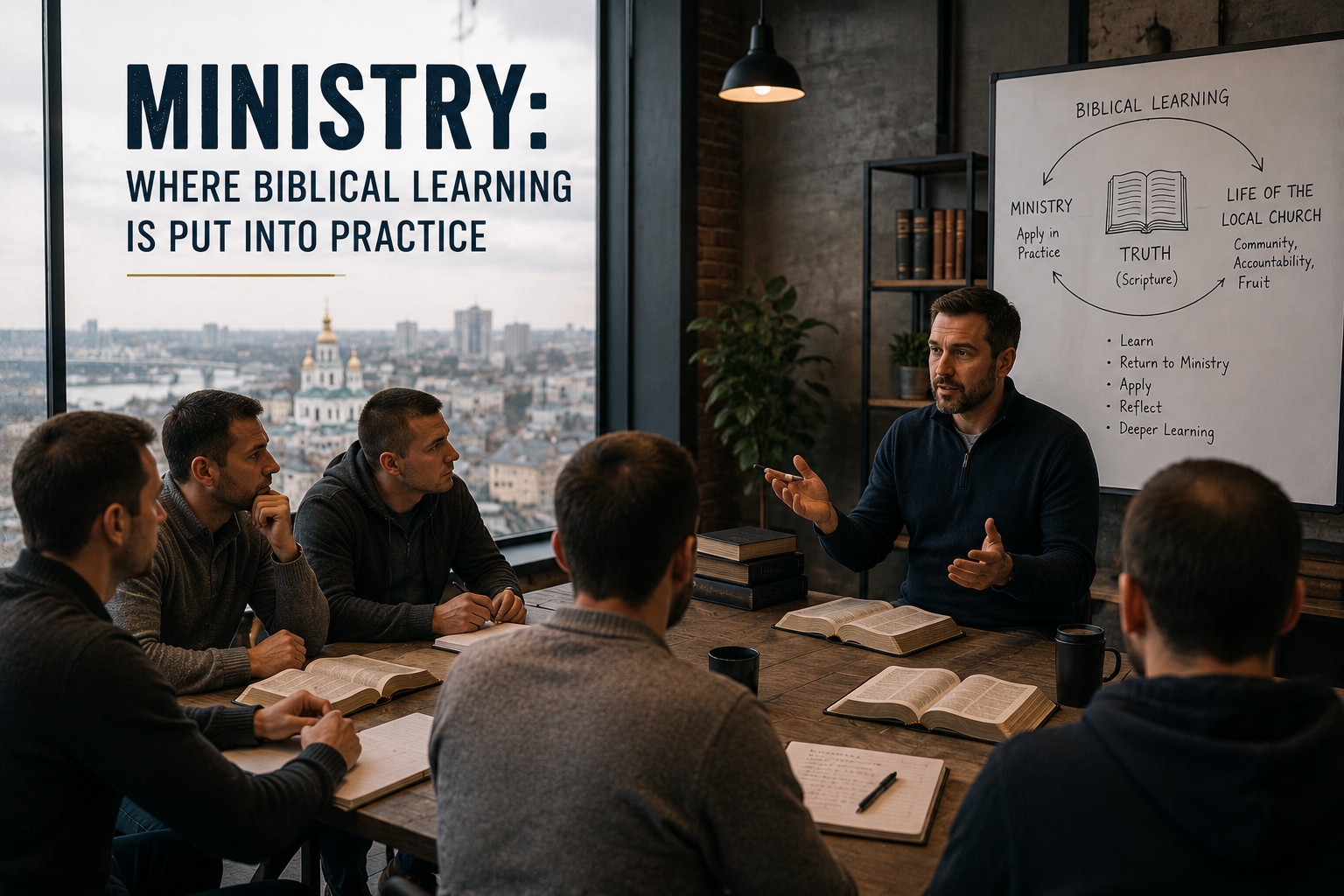
But theological education cannot end with the question, “What does this pastor need to know?” A pastor is not merely a recipient of theological information. He must take what he learns and bring it into the realities of ministry. He must preach it, teach it, counsel from it, make decisions in light of it, and allow it to shape his own character and relationship with Christ. The pastoral task demands integration. Theology must eventually move from the notebook into the pulpit, the counseling conversation, the discipleship relationship, the leadership meeting, and the ordinary decisions that make up the life of a church.
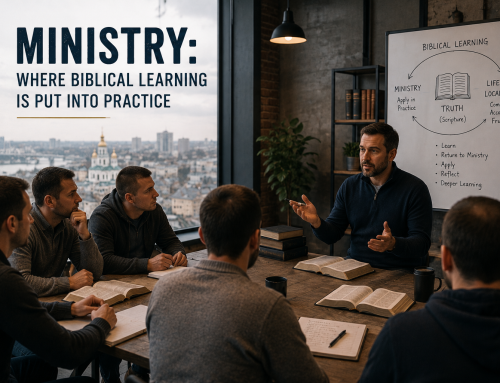
That is where ministry becomes an essential part of the educational process. Active ministry provides an environment in which learning can immediately be applied and tested. A pastor studying Romans while preaching Romans experiences the material differently from someone encountering the text only as an academic exercise. A leader studying ecclesiology while wrestling with actual questions in his congregation must think carefully about how biblical convictions shape church practice. Someone learning about discipleship while actively discipling believers discovers very quickly whether he can move from understanding a concept to faithfully practicing it.
This does not diminish the importance of academic study. It demonstrates its purpose. Knowledge matters precisely because truth should shape life and ministry. The goal is not to choose between theological depth and practical ministry. The goal is to bring them together so that theological understanding increasingly informs faithful ministry practice.
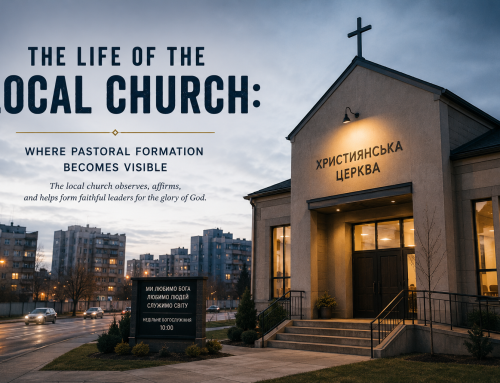
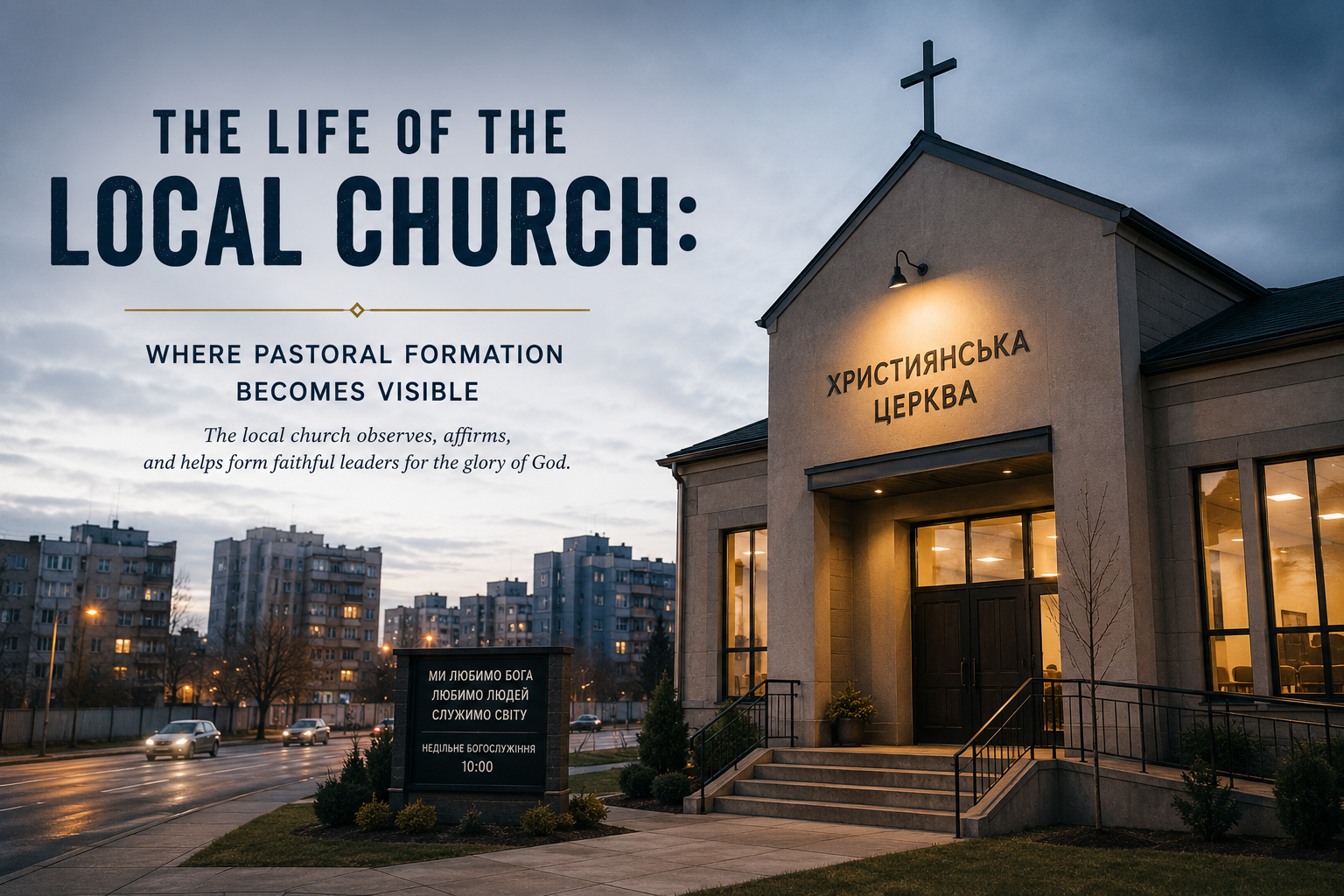
There is also a third component, however, and I believe it is too easily overlooked: the life of the local church. The church is more than the location where a pastor happens to use his education. It is the community in which much of the fruit of that education becomes visible. A teacher can evaluate whether a student understands the material being taught. The pastor himself can describe how he is attempting to apply what he has learned. But the local church occupies a unique position. The people of the congregation actually live alongside that pastor and experience his ministry over time.
They hear his preaching. They receive his counsel. They observe his leadership. They see how he handles conflict, how he treats people, how he responds under pressure, and whether his growing theological knowledge is accompanied by spiritual maturity. They can see whether his preaching is becoming more biblically grounded and whether his leadership is becoming wiser. In other words, the local church provides something that neither the teacher nor the student can provide alone: a community in which the effects of theological education can be observed over time.
This is one reason I have become convinced that the local church should not be treated merely as the eventual destination of theological education. The church should be part of the educational environment itself. The New Testament consistently places the formation and development of Christian leaders within the life of the believing community. Ephesians 4 describes gifted leaders equipping the saints for the work of ministry so that the body of Christ grows toward maturity. Second Timothy 2:2 presents a pattern in which truth is entrusted to faithful people who will then teach others also. Learning, ministry, and multiplication are intertwined.
This relationship has become central to the way I understand Modular Theological Education. The word modular describes the structure, but the schedule is not what makes the approach significant. Simply compressing a traditional course into a shorter period of time does not create an educational philosophy. The more important question is what happens between the modules. The pastor returns to his church. He continues preaching. He continues counseling. He continues leading. He has opportunities to put what he has learned into practice, wrestle with it in real ministry situations, and return to future training with new questions created by that experience.
That creates a continuing relationship between learning and practice. Biblical learning informs ministry. Ministry provides an environment in which that learning is applied. The local church observes, receives, and participates in the resulting growth. Then the pastor returns to further learning with ministry experience that affects the questions he asks and the way he understands the material. Rather than treating education and ministry as two separate stages—first learn and then someday serve—the two can develop alongside one another.
This is the framework I want to explore over the next several posts. We will begin with biblical learning and consider why theological depth must remain foundational to pastoral preparation. Then we will turn to ministry and examine what happens when pastors are able to apply their learning in the context where they are already serving. After that, we will consider the life of the local church and the important role the congregation plays in the development of its leaders. Finally, we will bring all three pieces back together and consider why their integration matters.
This series is not an argument that there is only one legitimate way to educate pastors. Nor is it an argument against seminaries, universities, or formal theological degrees. Each can make an important contribution to the preparation of ministry leaders. The question I want to raise is more fundamental: What happens when theological education intentionally keeps biblical learning, ministry, and the life of the local church connected?
After nearly two decades of teaching pastors and ministry leaders in different cultural settings, I have repeatedly seen the value of that connection. The teacher can say, “This is what we are teaching.” The pastor can say, “This is how I am putting it into practice.” And the church can say, “This is what we are seeing.” Those are three different perspectives on the same process of formation.
That is the heart of this series. Biblical learning gives ministry its foundation in truth. Ministry gives biblical learning an immediate arena for application. The local church provides the community in which that learning and ministry can be observed, strengthened, and multiplied. Each matters on its own, but something particularly valuable happens when they remain connected.
Biblical learning. Ministry. The life of the local church.
These are not three separate lanes in the preparation of ministry leaders. They belong together. And over the next several posts, I want to explain why.